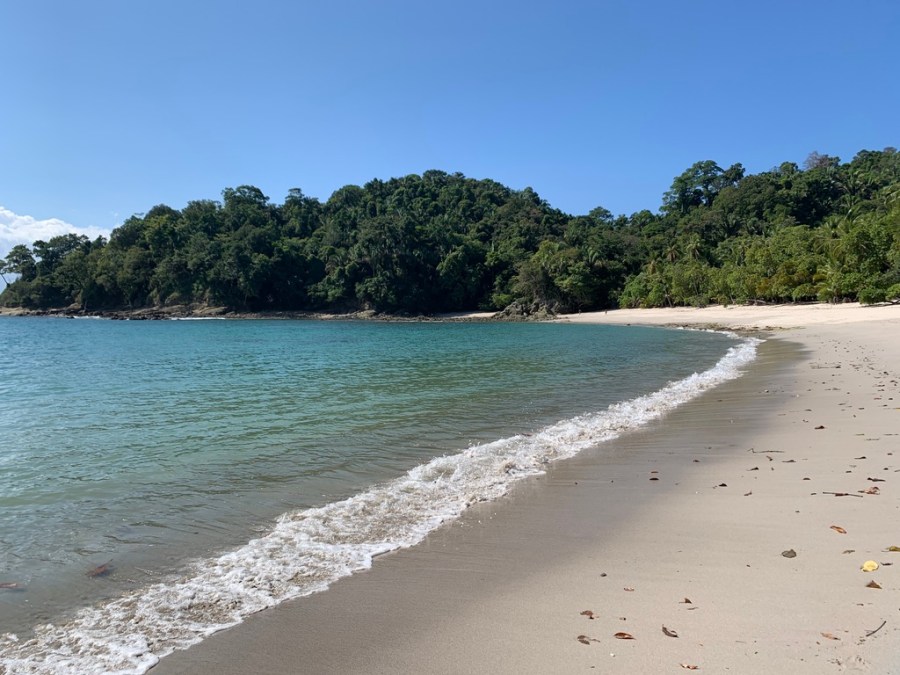
‘How do you like Costa Rica?’
Paul Theroux, The Old Patagonian Express (1979)
I told him that I thought it was a beautiful country… The mountains, I said … I told him I thought the people in Costa Rica were extremely pleasant … It was a green country, I said.
Why visit Costa Rica? For me, it goes back to a well-thumbed copy of The Old Patagonian Express. Paul Theroux’s journey from Massachusetts to Patagonia had enough dark alleys and squalid hotels to put me off retracing his steps. All except for Costa Rica, the country that inspired his subsequent novel The Mosquito Coast. So I mentally filed away Costa Rica as the one country I’d consider visiting in that part of the world.


These days, everyone I know has either been to Costa Rica or is considering it. Countless friends said it was their favourite country, great for wildlife, so laid-back, a happy country… stunning sunsets and endless beaches.
I finally got to Costa Rica in December 2023. People who haven’t been are asking me what it’s like. Here are a few takeaways from my recent experience in the land of pura vida.
Take a tour in Costa Rica or go it alone?
Planning my own trips around Europe is usually a dream. With Costa Rica I didn’t know where to start. Feeling somewhat un-intrepid, I booked a tour with Intrepid Travel that packed Costa Rica highlights into two weeks: guided hikes in five national parks, plus a homestay and a visit to the indigenous Maleku. Intrepid aim to keep things at a local level.
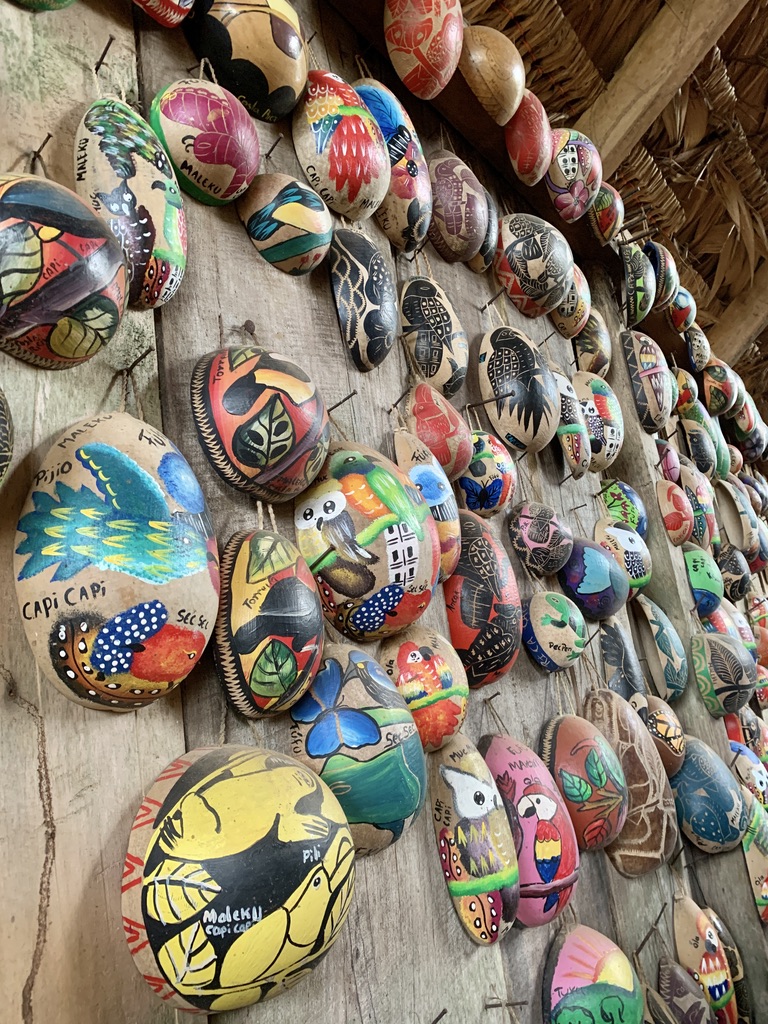
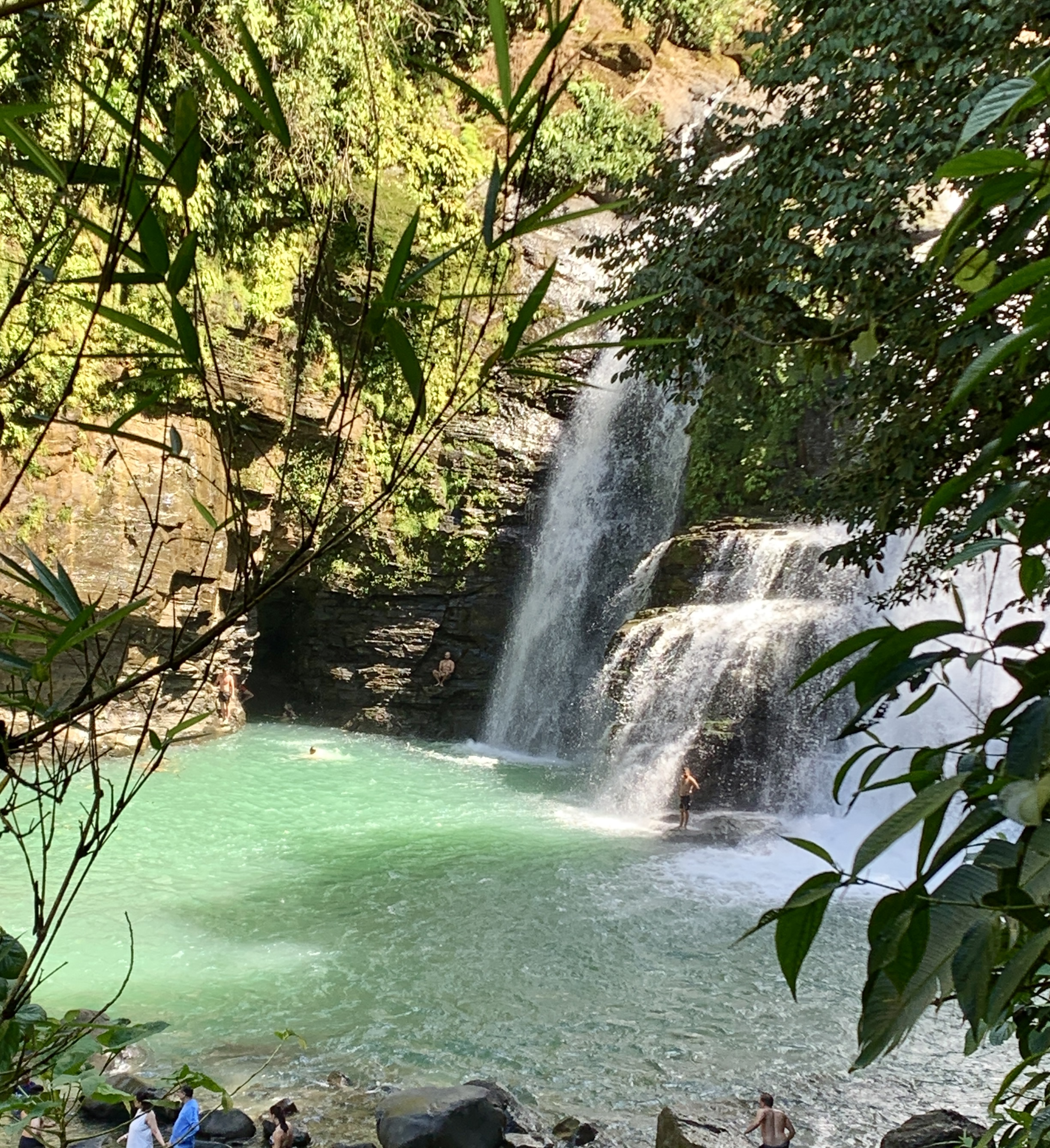
But two weeks felt too short to visit Costa Rica. As I’m able to work remotely, I extended it to almost the whole of December. At the end of the tour, we made our way down the Pacific coast to hang out in Uvita and Dominical.
Public transport in Costa Rica
Public transport can be challenging. As the ‘bus timetable’ (below) from Uvita shows, some times are a bit hard to figure out. I mean, what kind of time is ‘4:00 – 5:00 pm’ meant to be?
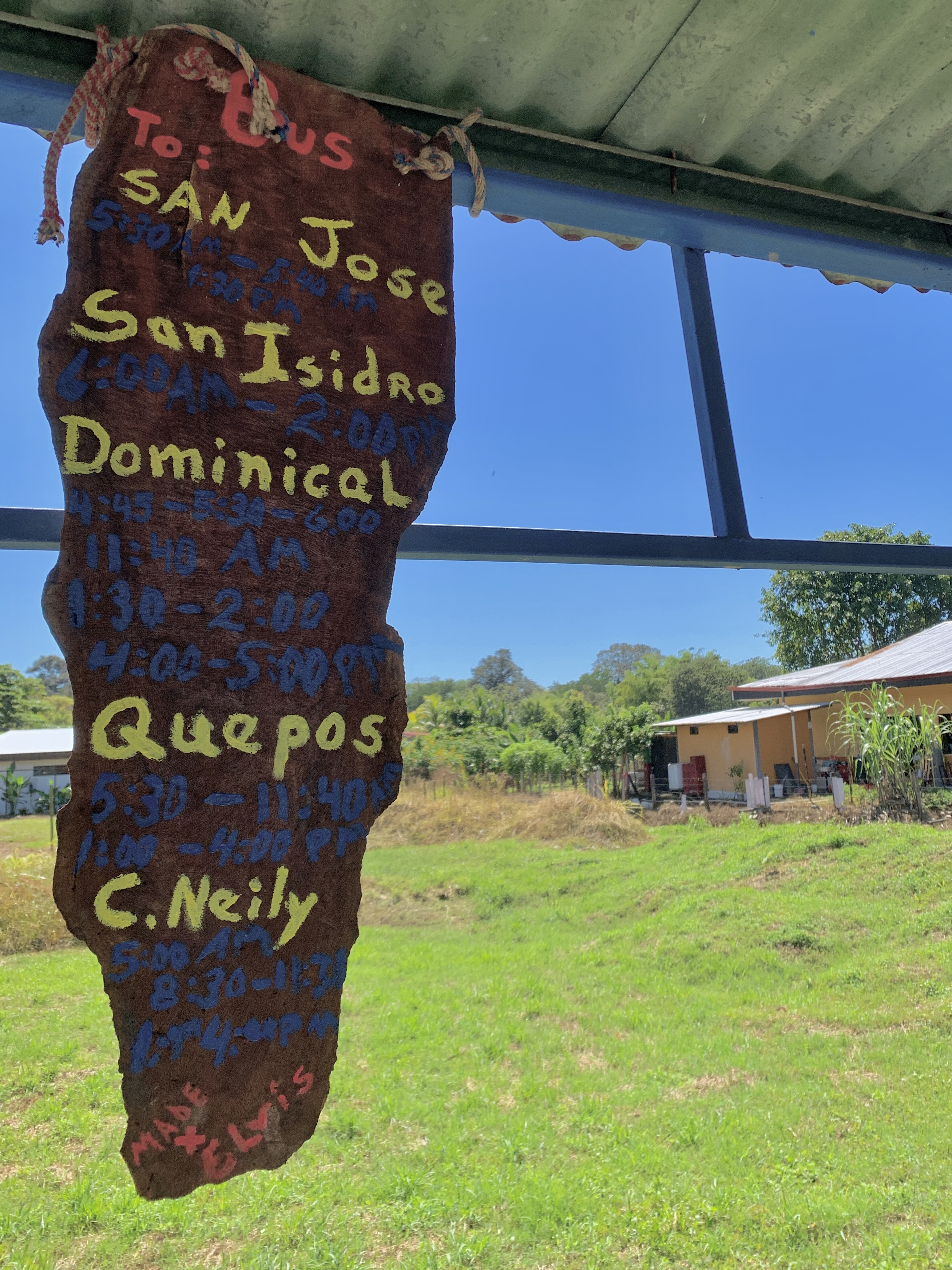
Always double check with a tourist office if you can. But public buses are cheap: a 20 minute ride from Dominical to the entrance of Nauyaca Falls cost around 50p/60c.
There are also private shuttle firms where you book online and get door-to-door service in a minibus. They are much pricier than the public buses, but you’re assured of a seat. We used RideCR to get from the Pacific Coast to San Jose, and it was fine.
You can also use Uber in some areas, such as San Jose.
The best way to see Costa Rican wildlife
Costa Rica’s network of protected areas and national parks hosts a vast range of wildlife. The usual advice is to book a guide in one of the national parks, and the expertise is invaluable. Guides use scopes to zoom into the jungle and show you creatures you’d otherwise miss. Without a guide, we’d never have spotted the agouti among the leaves, the tiny red poisonous frogs, or the well-camouflaged iguana basking on a branch. And before long we could spot and name the white-headed capuchin, howler, spider, and squirrel monkeys.


Look up and you’ll spot toucans and macaws. Hummingbirds are also a mesmerising sight where people have set up feeders. But what you spot is also down to luck. Our guide in Manuel Antonio was overjoyed that he’d managed to identify three sloths, all high up in the trees. Yet a few days later, walking to the waterfall above Uvita, we happened upon a far better view of a Three-Toed Sloth – munching right above our heads.


Is Costa Rican wildlife dangerous?
Book a night tour and prepare to be alarmed at what you didn’t realise was lurking so close to the path. In Monteverde, our guide illuminated a boa constrictor, tarantulas, scorpions and a coiled green viper. Our daytime walks never quite felt the same after that.
Are crocodiles a danger in Costa Rica? Up to a point. There are a few attacks on humans each year. You’ll see signs warning you on riverbanks, such as the middle image below (Uvita).
The morning of 13 December, our tour at Manuel Antonio NP ended at the famous beach. At last a calm bay for swimming, and no one else in the water! I should have asked myself why . . . As park rangers discussed whether the long shape in the sea was a log or something more ominous, a zoom lens settled the discussion (bottom left image).

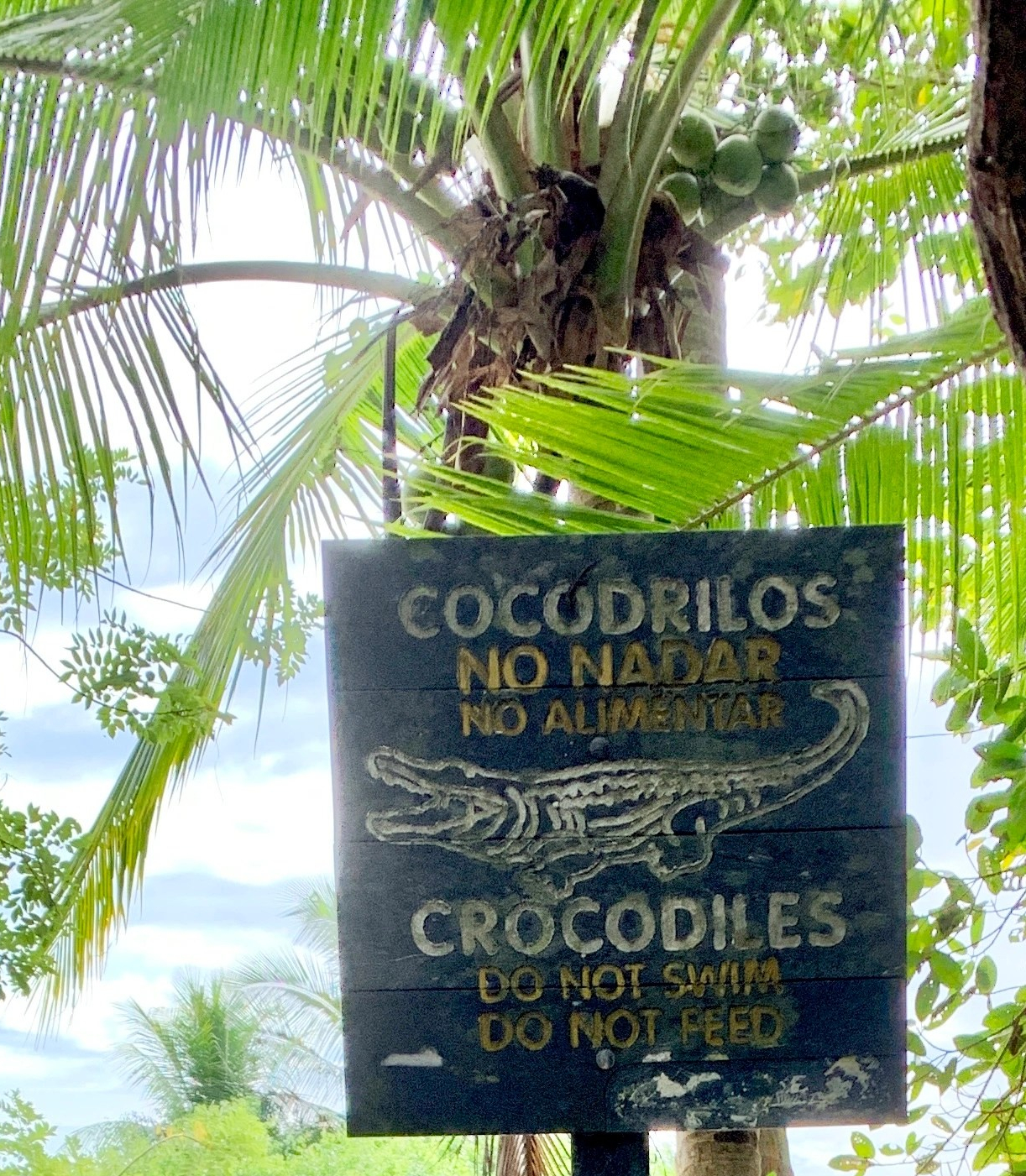

Crocodiles do swim in coastal waters, particularly in estuaries where rivers meet the sea. Advice states that you should avoid swimming in rivers if there are warning signs, or where freshwater rivers or streams meet the ocean. And yet in Uvita we saw people gathered on the pebble ‘beaches’ of the river that had this very sign. Our hotel owner claimed it was fine to walk a little upstream to where the water was fast-flowing, as the crocodiles don’t like it there. No thanks.
Is Costa Rica expensive?
It’s well-known that Costa Rica is more expensive than other Central American countries, although well-organised visitor facilities balance that cost. But while wages are higher than its neighbours, I wondered how far Costa Ricans could afford the prices we were paying. You can eat more cheaply in the local sodas, the no-frills eateries, but even there the typical Casado dish without meat was around $6-7.
One of the first things I bought when I was home was a pineapple, to recreate that sense of pura vida. In my local Tesco, a Costa Rican pineapple cost exactly the same as I’d paid in an Uvita supermarket.
Where else to go in Costa Rica?
Of all the places we visited, Tortuguero stands out as a hypnotic, edge-of-the-world kind of place. Gliding into Tortuguero National Park by boat is like entering a portal into a magical watery world. Swampy palm forests border a long canal and a wide lagoon; a caiman glided past and white-faced capuchin monkeys glared at us. A narrow ribbon of land separates this water from the Caribbean Sea.
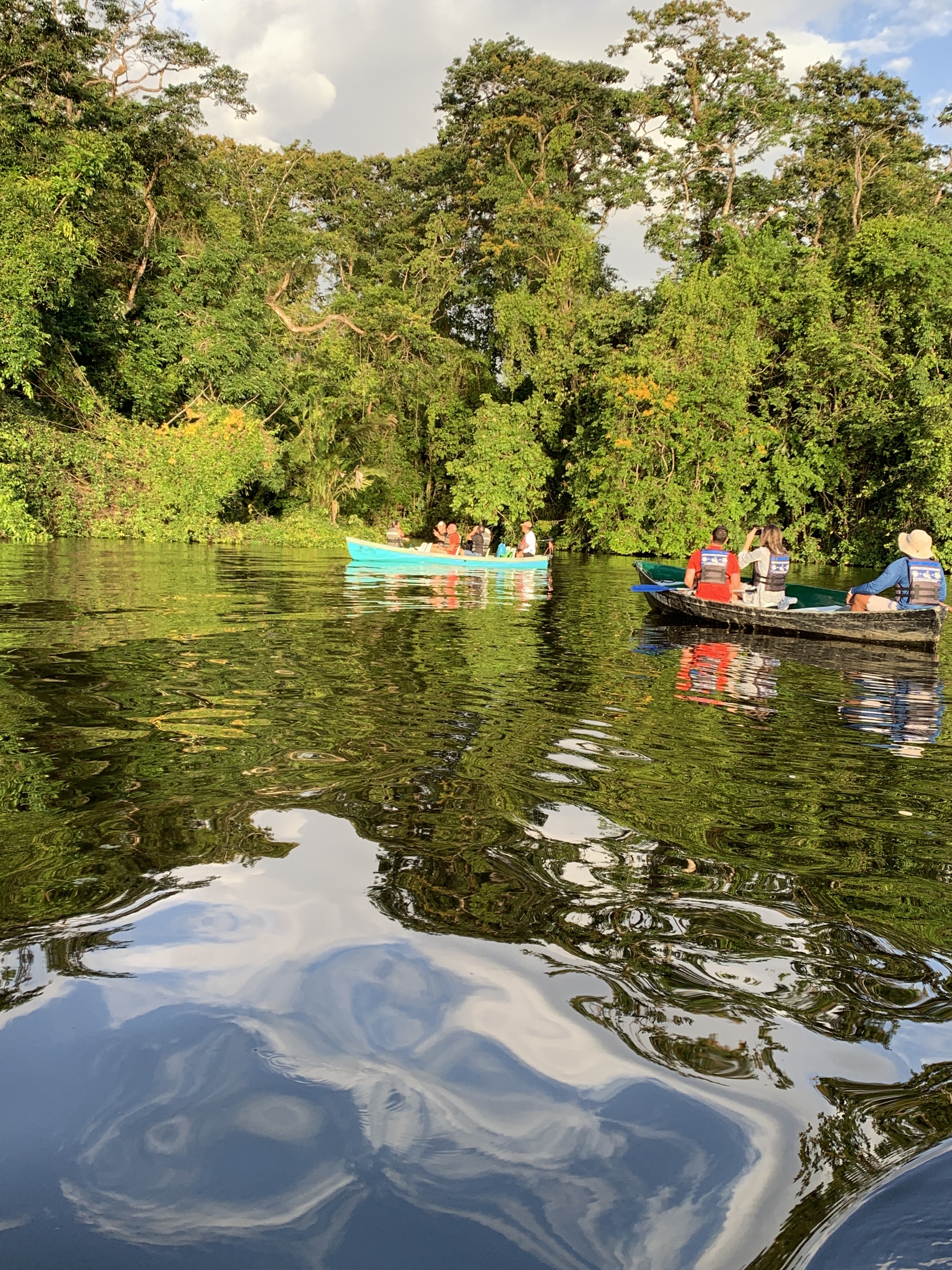


Tortuguero is a turtle nesting site where summer visitors go to watch baby turtles hatch and make their way to the ocean. The boom of unruly waves is just a few feet away as you hike along the narrow Jaguar Trail through the jungle.
Sunsets and dirt roads on the southern Pacific coast
Not going straight home after the tour turned out to be an excellent decision. Once the hectic tour with early starts was over, we travelled further south to two small coastal towns. Here, apparently, we’d get a sense of old Costa Rica.
Uvita is famous for its iconic sandbar in the shape of a whale’s tail. The entire beach lies within the Marino Ballena National Park, which means paying (around $6.50) each time you set foot on the beach. During low tide, you can walk out on the sandbar, but there’s little sense of the shape when you’re actually on it.


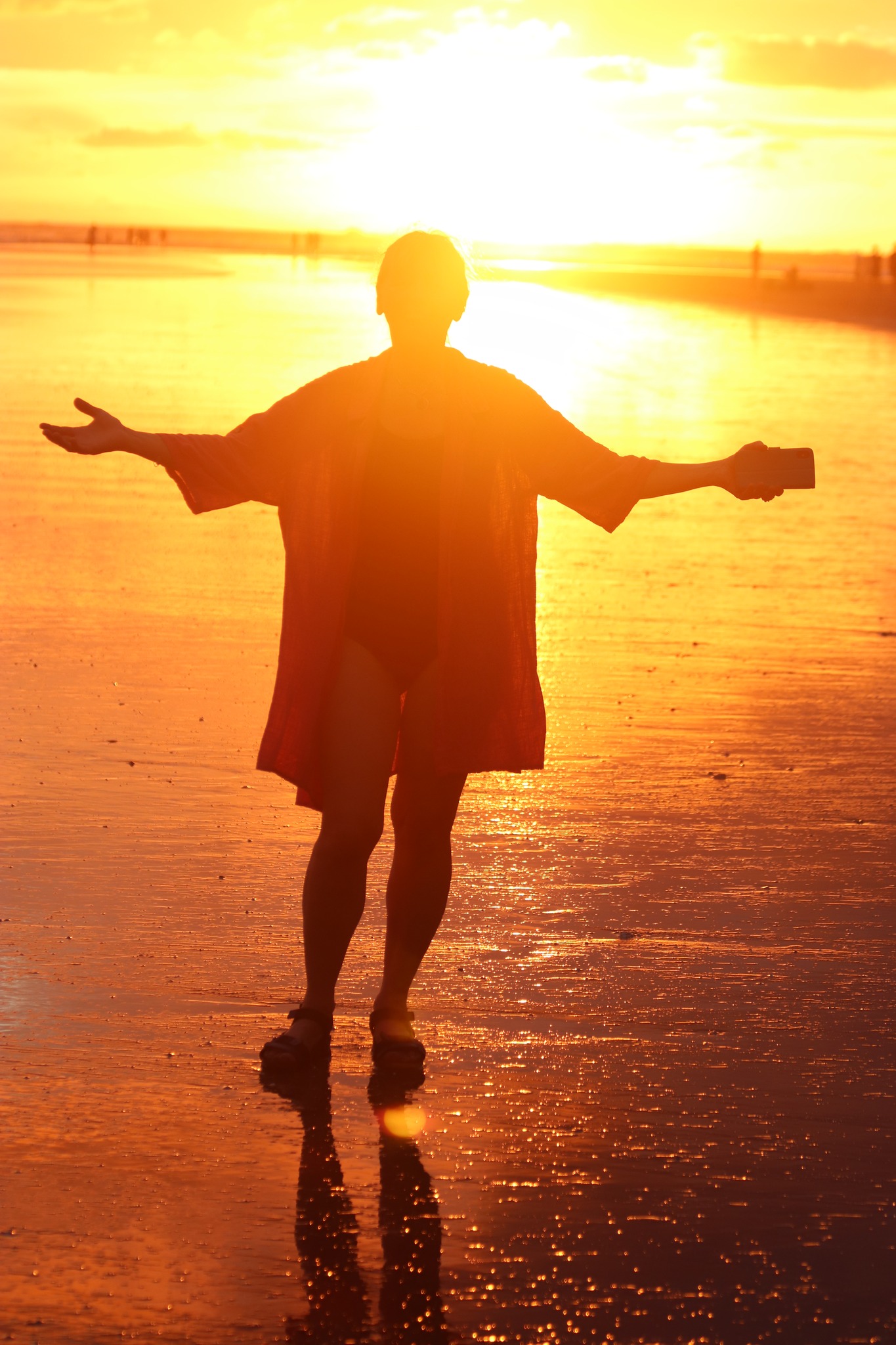
More thrilling is to time your visit to when the tide comes in, when waves criss-cross each other as water gushes in from both sides. Even better if it also happens to be sunset.
Uvita is spread out and there are lots of cabinas for rental. We stayed in Scott’s Cabinas d’Val, a small collection of well-equipped cabins with a pool in the Bahia area. When the temperature of 32 Celsius feels like 42, the palm-shaded pool helps escape the heat and humidity.
Half an hour up the coast, Dominical is known for its laid-back bohemian surf culture and surfing schools. Dominical was touted as lively and vibrant, so I booked accommodation on the quieter edge of town. That was unnecessary, as Dominical’s liveliness was somewhat elusive when we were there. A handful of barefoot surfers walked Dominical’s unpaved roads, while others rocked up to bars on skateboards. On a Friday night the best restaurant closed at 8pm and the only bar with music had a family of children playing. Good vibes, though.
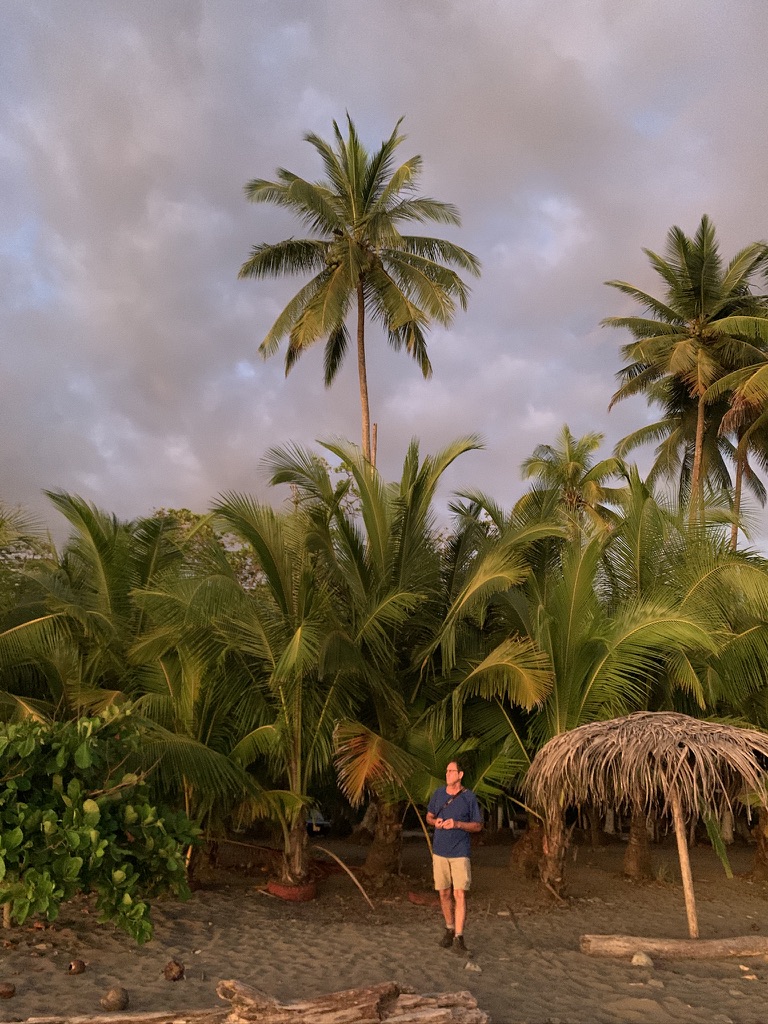

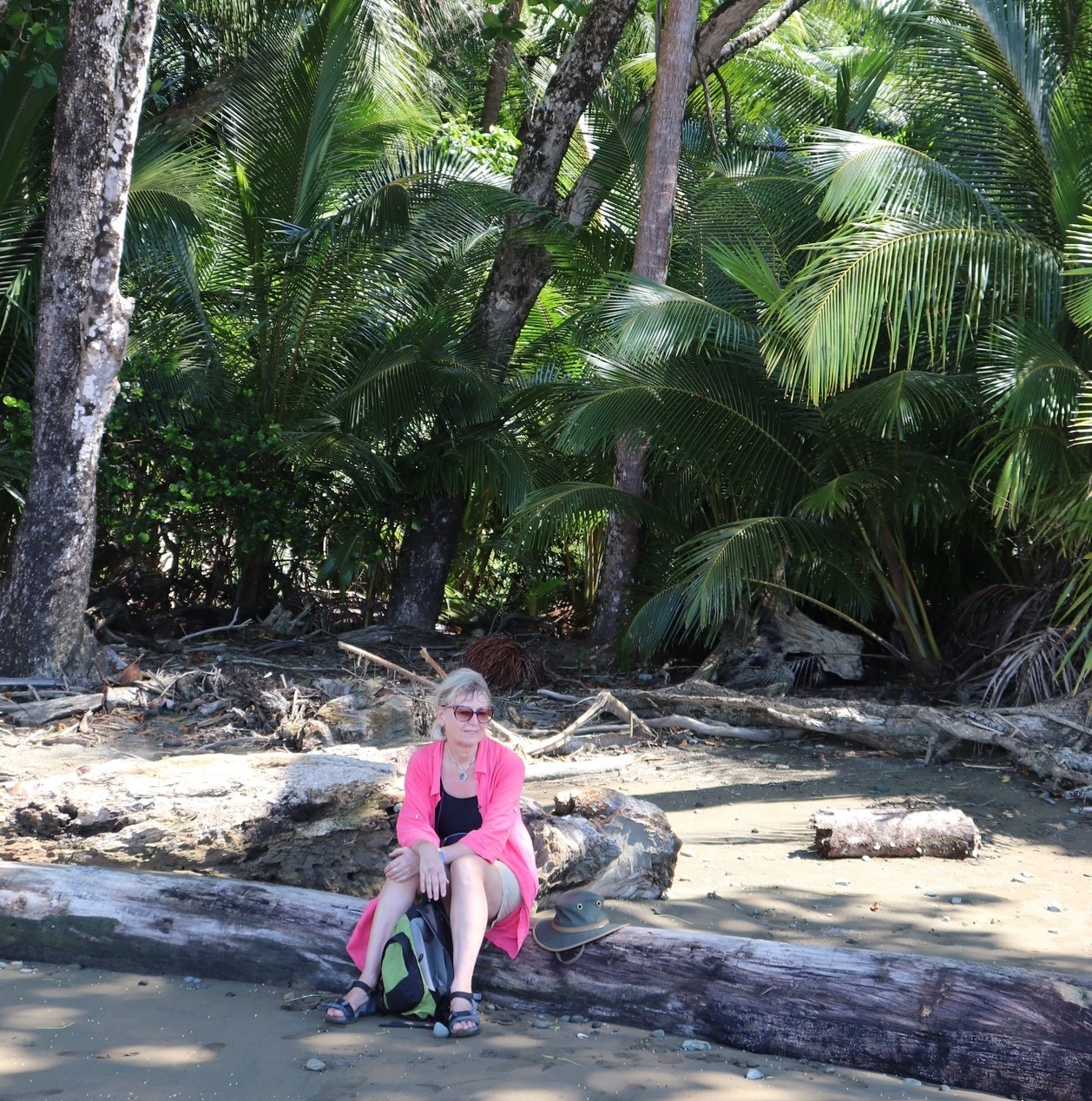
But in the end, the Hotel Tropical Sands was perfect – an oasis of green from where the pounding waves lulled me to sleep.
The tall waves make both Uvita and Dominical good for surfing, less so for swimmers. On yet another red flag day, I wished I’d spent more time in that calm bay at Manuel Antonio. Oh, wait . . .
Where to stay in San Jose
Our return flights meant a Christmas spent in San Jose. I wanted a hotel where we could stay put – somewhere with a restaurant, a pool and grounds. The Hotel Bougainvillea had all of those, including botanical gardens and the friendliest staff. Situated above the city, the Bougainvillea has a much less hot and humid environment. All of this made the Bougainvillea one of the nicest hotels I’ve ever stayed in. Pura vida!
Photographs by Michelle Lawson and Terry Dolman.
I’ve included details of accommodation but only those I’d re-book and recommend. These are affiliate links that may grant me a small commission if you book through the links, at no cost to you.
 Michelle Lawson | Travels in the hidden corners of Europe