Tips for exploring Europe independently as a solo female traveller
It must be difficult travelling alone as a woman
Someone said that to me a few years back. Where to start with answering it?
I first began travelling by myself in the 1980s, on solo Interrail trips. I also travel with family members, but there’s something magical about hoisting on the backpack and stepping onto a plane, train or bus. It’s partly the complete freedom to follow my own instincts rather than compromise.

Travelling solo isn’t for everyone. You need to be self-sufficient, to enjoy your own company and not be fazed by solving problems on your own. But it’s not all about negative aspects. According to this BBC article, 2023 has seen double the number of people Googling “solo travel” compared to 2018.
Travelling solo can bring tremendous benefits. Here are those that work for me:
- The freedom to do what you want to do. Your idea of “making the most of a place”, “living your best life” or whatever cliché comes to mind could differ from your travel companion’s priorities. Perhaps you like to seek out the best café rather than the best bar. Or you enjoy popping into local restaurants rather than queuing for the #1 on TripAdvisor. Or your partner doesn’t see the point of simply wandering the streets. Travel alone and you can follow your own instincts.
- You’ll get the chance for personal reflection as you disconnect from your other life. I get my best ideas when I’m alone in a new place. Perhaps you’ll discover new things about yourself.
- See the culture and the people through your own lens, not that of a companion. Alone, you’ll experience it all from the inside, with no one else’s perspectives seeping into yours.
- Travelling solo could help build your confidence. Navigating new situations and places can instil a sense of self-esteem if you discover you’re more competent than you ever imagined.
- You may find local people are more willing to talk to you. Travelling as a couple, you’re a self-contained unit that outsiders may be unwilling to disturb. When I returned to Ukraine alone, so many people stopped to ask me where I was from or what I was looking for. I was even invited to join a group of friends on a kayak. Nothing like that happened the previous year when I was with a companion.

All of this is what drives me to travel – and to plan the next trip as soon as I’m back home. But like most people, I also get anxious when travelling alone. Here is how I’ve overcome the challenges of solo travel.
Fear of the unknown
This is really a blessing in disguise – after all, isn’t discovery at the heart of why we travel? Interrailing in the pre-internet days, I sometimes found myself in a place with no visitor facilities, just open-mouthed locals. Like Mondim de Basto in northern Portugal – the station led me into someone’s garden where a family stared without smiling. The hotel was temporarily closed, but a stranger led me to a house where female teachers lodged, excited to have a foreigner staying with them.
Nowadays, almost everywhere in Europe is mentioned on a blog post and on accommodation booking sites. And map apps familiarise you with the street layout. But don’t limit yourself to research via blog posts or even guide books. Travel literature, or travelogues, combine personal observations with factual information about the places visited. Try searching the Travel Writing genre on Amazon or in a bookstore. Or see the recommendations on the Trip Fiction website, where you can search for books featuring a destination.
Worrying about “the language barrier”
I don’t like the word “barrier” here. It implies that language is a deterrent, a way to block rather than a means to communicate. But speaking a common language isn’t the only way to communicate. And it’s uncommon these days to land up in a location where no one speaks English.
Back in the 1980s, it was rare to come across an English speaker in rural areas and countries such as Hungary and Czechoslovakia. My diaries from those rail trips are filled with essential words and pronunciation notes for Hungarian, Portuguese, Czech and Finnish. Learning a few dozen words in advance really helped. And basic French and German was useful as a lingua franca.
Even watching a few YouTube lessons makes you familiar with the sounds of a language. Download the Duolingo app – handy for those long rail journeys. Make sure your phone has a translation app, too, such as Google Translate or Say Hi.
Anxiety about getting stranded when travelling
With transport strikes, delays and cancellations, not to mention extreme weather events, this is always a possibility. And of course it feels worse when you’re alone, but it shouldn’t put you off setting out. Make sure your travel insurance covers multiple-stop itineraries – I once had a claim rejected as it wasn’t a straightforward two-stage out-and-back journey.
An accommodation app is crucial for last-minute bookings (I’ve found booking.com to be the most helpful for me). Rail Europe is pretty comprehensive for train timetables, although the Interrail/Eurail Rail Planner app is my go-to, whether I’m using a rail pass or not.
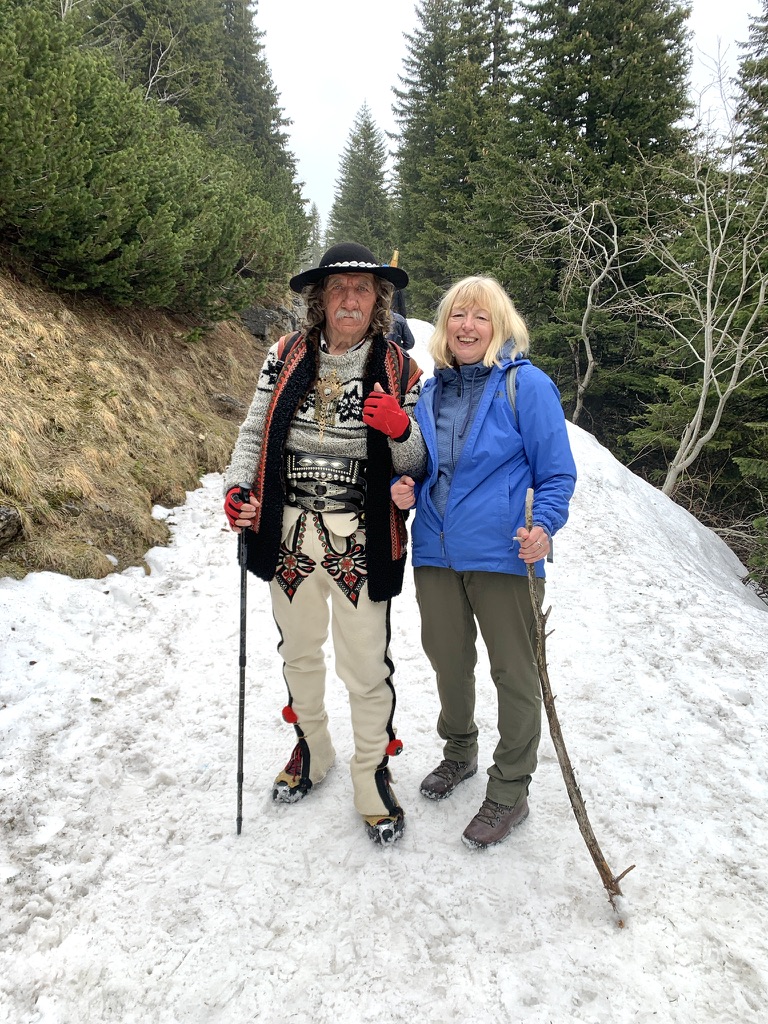
Even if you intend to use trains rather than buses, it’s a good idea to download a bus app, such as Flixbus, for when the trains let you down. Flixbus saved me when I got thrown off a Polish rail replacement bus for not having a seat reservation. Within 10 minutes I had a mobile Flixbus ticket that got me to Zakopane the same afternoon. Flixbus has a pretty extensive route system across Europe, with tickets available via their website as well as the app.
Another app which has helped reduce financial anxiety is the Wise card. It’s a multicurrency account that I use to save for my trips and transfer currencies with low fees. There’s a digital card but I prefer a physical card for drawing out cash. Wise has saved me heaps on exchange fees and the account allows me to save up (and even get paid) in a specific currency. Such flexibility has transformed the ease of travel.
How to keep safe when travelling solo?
As the BBC article notes, female travellers are more alert and conscious of their safety. There are sites out there with information about basic self-defence techniques, and I won’t repeat them here. But I do have a few other rules I’ve relied on over the years to stay safe and confident.
- Keep connected with people back home. If you don’t have internet roaming, then consider purchasing a local/Europe-wide SIM card. Write up your travel itinerary and share it as a Google doc, keeping it updated.
- Stay aware of your surroundings and try to walk as if you know where you’re going. That way you’ll look like a local rather than a confused tourist. When people ask me for directions, I know I’ve got it right.
- Research your destination for any security quirks. Certain cities become renowned as phone-snatching hotspots because of the opportunities on offer.
- It makes sense to avoid travelling alone at night, although this isn’t always possible. On a recent Interrail trip I had three long-distance journeys using services that arrived after nightfall – annoying, but unavoidable as there was only one daily train. For each one I booked accommodation within sight of the station and memorised the route or drew an inconspicuous map.
How to avoid being lonely when travelling solo
It happens. One way to get a dose of conversation is by booking a walking tour. The GuruWalk website lists free walking tours worldwide. You might get talking to someone on the tour, although in my experience the other travellers are often couples, wrapped up in themselves. Fortunately, the guides will be happy to talk with you, and what better way to glean local detail?
What about the growing trend for food walking tours? Even preoccupied couples can’t avoid joining in as everyone sits around a table eating and drinking. This tour in Budapest got us all talking as we sampled strudel, goulash and other specialities. It was also a fascinating insight into life in today’s Budapest.

Sites such as Meet Up offer useful databases of activities wherever you happen to be.
Hotels, I’ve found, can be lonely. Airbnb rooms give opportunities to interact with owners, but if you prefer more privacy, try searching apartment reviews for mentions of friendly on-site owners.
I wished I’d done that in Budapest, rather than interacting with a key box and messaging a faceless owner when the gas didn’t work. Fortunately I then moved onto Croatia, where every owner was onsite, female and exceptionally friendly. In Split at check-out time I was rewarded with coffee and a chat at the kitchen table. In Trogir the owner checked in on me regularly and gave me an impromptu guide to the UNESCO landmarks from the roof balcony. And in Gradac, Danijela insisted on meeting me at the bus stop, then handed over home-made muffins and liqueur.

For nights when you just want to feel at home, there’s always Netflix … the extra weight of a tablet can be worth it. Especially when it rains.

Note that some – but not all – of the links above are affiliate links, and only to services that I’ve personally enjoyed and feel I could recommend. This means I may get a small commission if you make a purchase through the links, at no cost to you.
Keen to know more about travelling solo as a woman? Try the Journey Woman website, a comprehensive source of tips and articles aimed at solo women aged 50+.
 Michelle Lawson | Travels in the hidden corners of Europe