From Baltic to Balkans: Crossing Europe north to south by rail

In May 2023 I travelled from Lithuania to Croatia by train. It’s an epic route from northern to southern Europe and I used an Interrail/Eurail Global pass. How did that turn out? Well, it spawned an article on how not to plan an Interrail trip. It’s all explained in my article on the Go Nomad travel website.

For now, let’s forget the whole rail pass thing and look at the trip from Lithuania to Croatia by train. I’ve included details of accommodation but only those I’d re-book and recommend. These are affiliate links that may grant me a small commission if you book through the links, at no cost to you.

Exploring Vilnius and Kaunas

Arriving in Vilnius, the UNESCO-protected old town had a lively ambience that felt far from the dense crowds plaguing many other European cities on the weekend-break circuit. My bed was in the heart of the UNESCO-protected old town, a former monastery cell in the Domus Maria hotel.
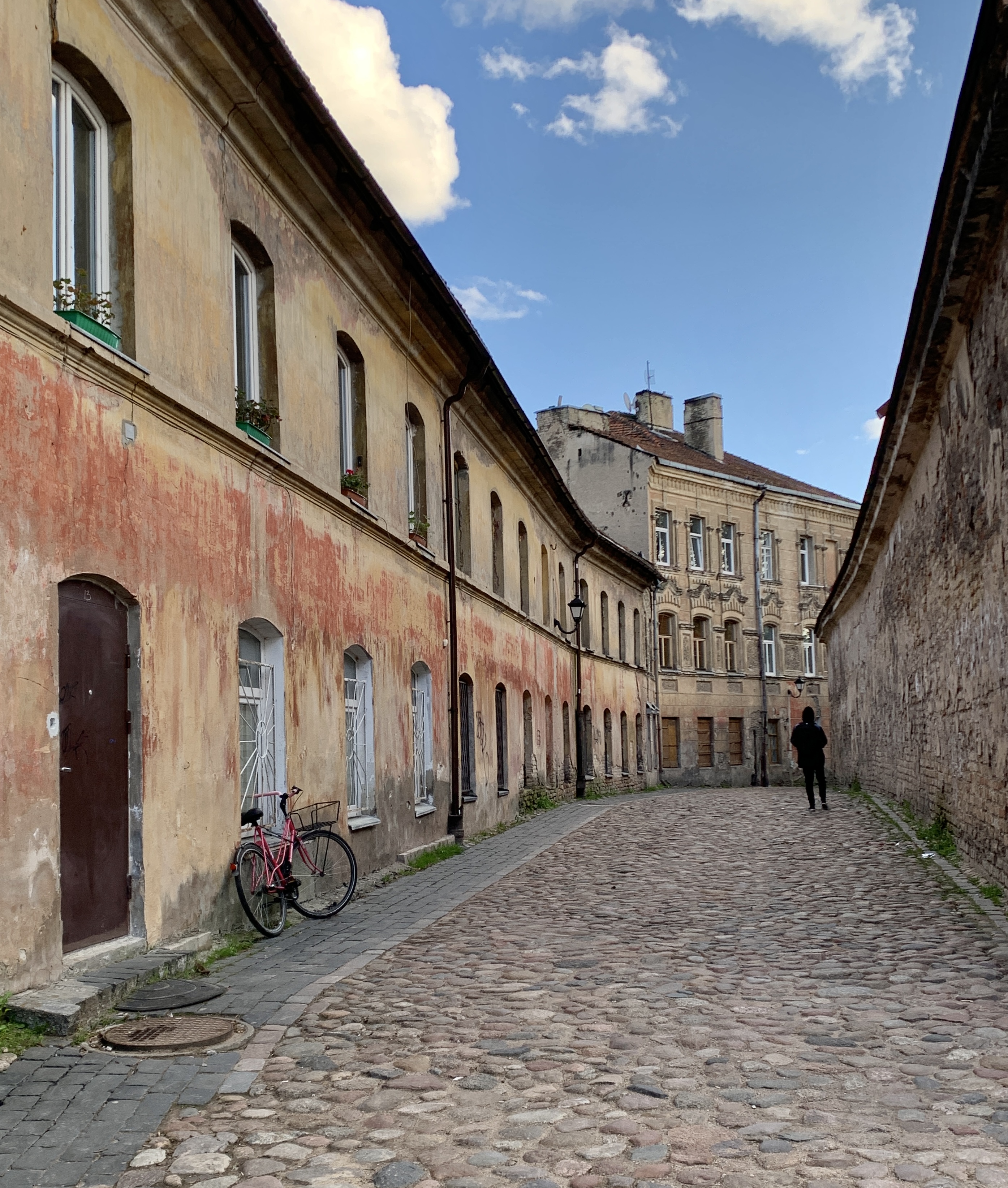
It was a short rail trip to Kaunas, Lithuania’s second city. Once again, it was a novelty to walk around a city without weaving through crowds of tourists. I spent a peaceful night in the Best Western Santakos hotel, close to the old town.

Lithuania to Poland on the new Rail Baltica connection

The new international connection from Kaunas to Warsaw took seven hours, including a change of trains at the border at Mockva. Then add an hour to account for Lithuania being an hour in front of Poland.

Either side of the Tatra Mountains

Trains from Warsaw via Krakow sped me to Zakopane, Poland’s most popular mountain resort. There was so much snow that people were still skiing on the upper slopes, so I followed a line of hikers up, anxious that the increasing snow cover would make it difficult to get back down without crampons. But most other people were clad like me, in normal hiking boots, apart from the man wearing open sandals.

My destination was the Gąsienicowy meadows, a familiar image that graces Zakopane’s postcards, hiking routes and tourist websites. I was keen to stand among those green meadows dotted with pink wildflowers and cute wooden cabins, with a jagged grey mountain backdrop. But the lingering snow left it an unrecognisable monochrome with patches of rotting brown foliage. Even the peaks were smothered in thick cloud. Only hours later did the mountains emerge, when I rode the funicular up the other side of the valley.

This time I stayed in the Hotel Logos, which I’d recommend as it’s in a peaceful location but a mere 5 minute walk across the park to the main streets.

Exploring Slovakia by train

Avoiding a 2-day roundabout train route, I took the bus to the southern Slovakian side, spending a few days riding the electric trains running across the southern Tatra slopes. Then most of a day was spent riding four trains north-east to where Slovakia borders Poland and Ukraine. The first hours followed the scenic Hornád river, then a long wait at spooky Prešov station. Outside was a coffee and falafel stall, where the Middle Eastern owner crisped the falafel and asked about the latte. “It’s a new machine, used for the first time today. I bought the best I could,” he said. In the time it took to cook and eat the falafel, I was his only customer.

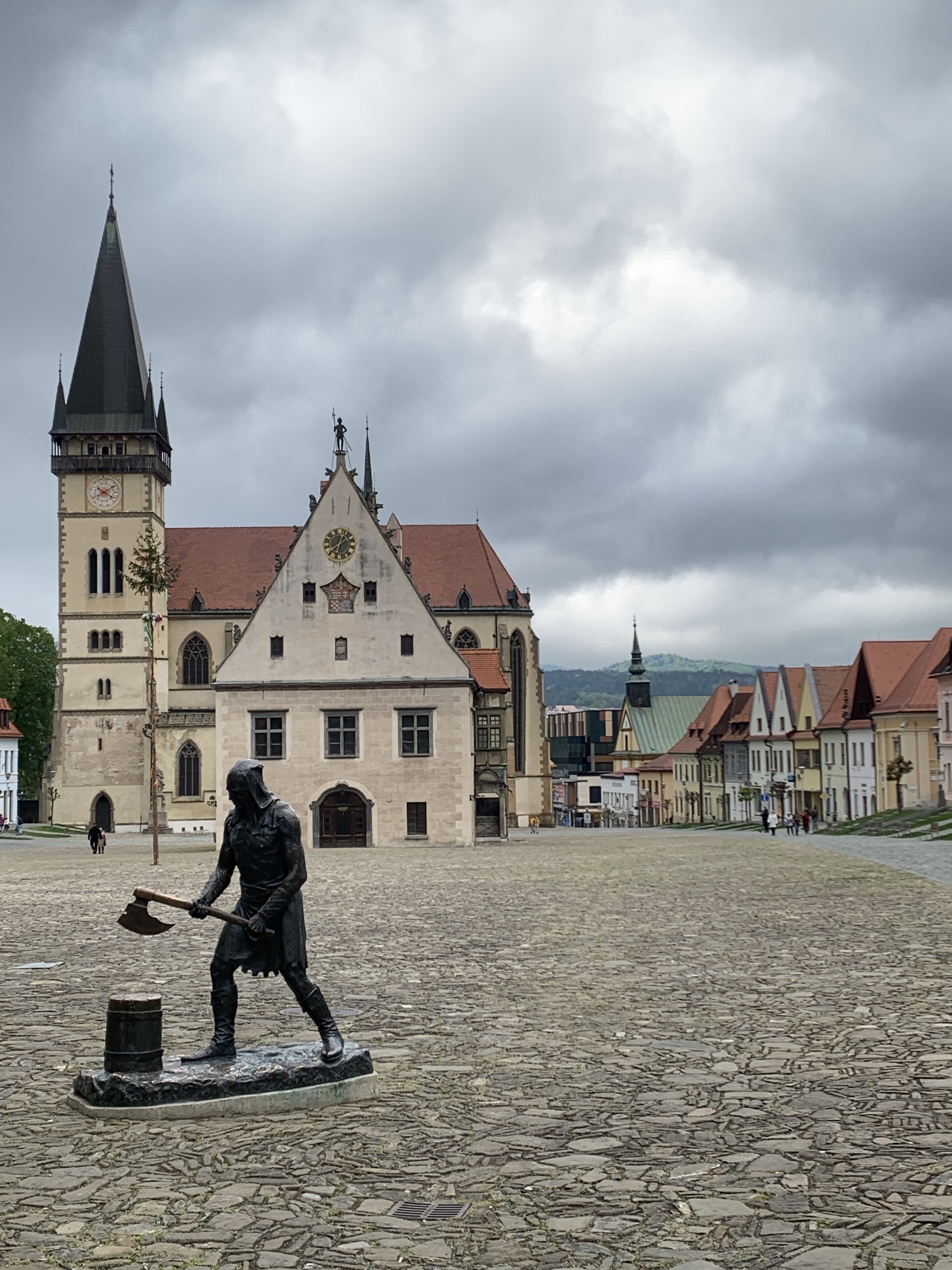
Bardejov’s UNESCO World Heritage square was so cold I layered up with almost every item of clothing in the backpack. I stayed at the Bardejov Kulturne Centrum, right in the main square and with prices from the last century.

Hungary, where everyone can once again feel at home

In Budapest the castle district was horribly crowded and the cafes all had queues. But few bothered to walk beyond the main tourist epicentre, perhaps put off by the enormous building site of the National Hauszmann Program. This extensive project is restoring Buda Castle to its previous glory after decades of post-war neglect. Hoardings tell how the current government is finally making up for the Communist indifference.

But it’s not just about architecture. It’s a project to symbolise Hungarian national identity, “to conjure up a place in the centre of the capital where everyone can once again feel at home”. The aim is to “return the castle to Hungarian people”. That hardly makes sense when the castle district is swarming with foreign tourists.

Hungary’s politics are increasingly nationalistic and authoritarian thanks to Prime Minister Orban. The previous day a former journalist told me how he’d left the job as it no longer involved writing news – “just propaganda”. Locals have replied to the official anti-Nazi war memorial (an eagle) with reminders that Hungary wasn’t always on the right side of history as far as the Jewish population was concerned.

From Lake Balaton to Croatia

The international train from Budapest to Zagreb followed the eastern shore of Lake Balaton, stopping at tiny stations and roadside halts over the six hours.

Zagreb was dark and rainy. Graffiti at the end of the station underpass greeted me with “God help us”. Ominous or what? Then my expectations were confounded as the station hall was filled with an enormous bookstall, still open at 10pm. A city that takes reading seriously!

The Hotel Central was no-frills but extremely convenient for a late arrival, being close to the station.

A morning in Zagreb confirmed it was an attractive city with narrow backstreets running through the old town, although churches were still closed due to earthquake damage. There’s an intriguing and poignant Museum of Broken relationships that’s exactly what it says.

The final train, to Split, was basic with no apparent refreshments, although beers appeared now and then from a secret stash. The isolated high land we crossed was spectacular, framed by a snow-capped grey mountain wall. We were running along the single-track Lika line, a battleground in the Homeland war of the 1990s, and some of the stations were collapsed shells. At one point my mobile thought I was in Bosnia. It was the most spectacular and memorable trip of the entire journey.

Swinging in Dalmatia

After a morning weaving through zombie-like cruise passengers around Split, I escaped to Trogir, yet another UNESCO town. Trogir sits on an island, built on Greek and Roman foundations with Venetian influences. History’s all around, from the bench constructed from ancient columns, to the photographs of 32 locals who died in the recent war between 1991-95 (go through the door below the clock tower in the main square).
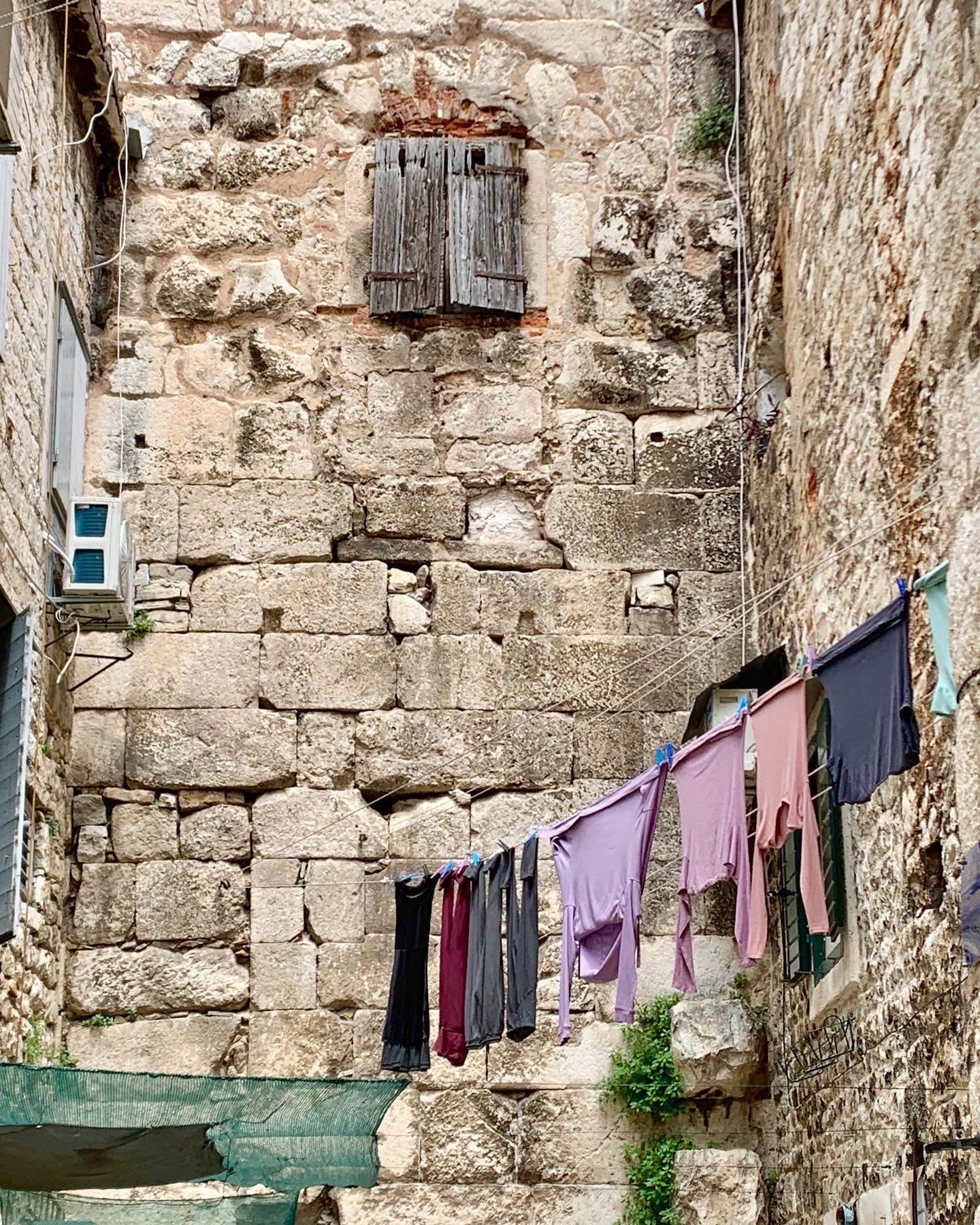
The bus south followed a serpentine coastal road towards Dubrovnik, my final destination. But before hitting the crowds in Dubrovnik I needed to rest and gather my wits.

The fishing village of Gradac was a perfect choice as it lies halfway between Split and Dubrovnik. Even better, it barely features on tourist itineraries. And Danijela’s Apartment Like Home was just perfect for a woman travelling solo.

The price of ice cream is a good indicator of the level of commercialisation. At 1.50 euros per scoop, Gradac welcomes its visitors but doesn’t lean towards pretentiousness. Within an hour of arriving I’d already made plans to return. For longer.

Gradac has a swing on the beach. Instagrammers and wedding couples no doubt love the swing but fortunately they never made an appearance. That left me to swing morning, afternoon and night until it was time to leave.

This was an epic trip, no doubt, via some of Europe’s great cities. But I’ll never forget discovering a place that’s not even mentioned in the Lonely Planet guide. Evenings were the best, swinging myself back to my childhood, accompanied by the lights of the shoreline and the blaze of orange from the church above the tiny harbour.

St Moritz

Make the Most of an Interrail or Eurail Pass with this Route

Following on from the previous post with tips for using a Global Interrail Pass (or Eurail for non-European residents), here’s a month’s Interrail route that makes great use of a flexible Europe-wide pass. On the whole it avoids countries that require seat bookings and supplements. All journeys were free with the pass apart from the the short ride from Jenback to Fügen (Austria) and the Swiss Bernese Oberland mountain railways/cable cars (the Interrail gave a 25% discount though).

Disclosure: This post contain affiliate links to accommodation that I’ve personally experienced and enjoyed. This means I get a small commission if you make a purchase through the links, at no cost to you.

Travel day 1 | Using the rail pass from London

From Devon, UK to Namur, Belgium. This was as far as we could comfortably travel whilst avoiding an expensive overnight in Brussels. It also avoided routes into Germany that were somewhat unreliable at the time. Namur is cheaper than Brussels and has a bar called Barnabeer with 47 beer pulls!

We stayed in BED Namur-Premium at the start and end of our trip. It’s a self-check-in property with a shared kitchen.

Travel day 2 | Belgium to Luxembourg by train

Namur to Luxembourg. Back when I was a tour guide in the 1990s, our coaches often diverted to Luxembourg to fuel up with cheap diesel. In frustration I’d gaze out at the city clustered above, below and along the edges of a deep river gorge, unable to leap off and explore. Now, after all those trains, it was a pleasure to walk this charming city. You can make use of elevators to move between the upper town and the valley.

We spent the night in the central Auberge Gaglioti, which was fine and fairly central in the new town. Luxembourg isn’t hot on budget accommodation.

Travel day 3 | Luxembourg to Strasbourg using trains

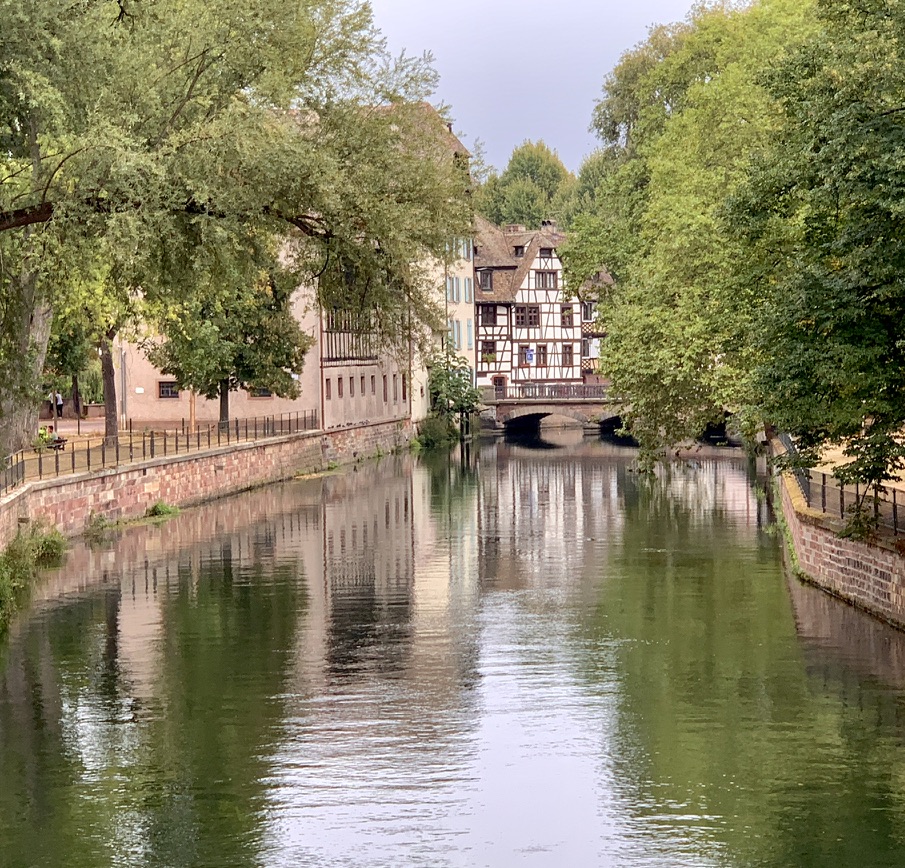
Luxembourg to Strasbourg (France). Strasbourg was a morning stop on our 1990s coach tours, although there wouldn’t be time for more than a quick stroll around the waterways and 16th century buildings of Petite France and a glimpse of the Cathedral’s astronomical clock.

Nowadays Petite France is busier, but no less enchanting . . . even when the peace was broken by a guitarist practising Wish You Were Here, the chords flying out of an open window on the upper floor of a half-timbered building.

We found the Aparthotel Adagio to be a good place to stay – out of the main buzz but still close to the centre. The mini kitchen in the room is a bonus when you’re on an extended trip.

Continue reading “Make the Most of an Interrail or Eurail Pass with this Route”
Swiss railway at the foot of the Eiger

Ten Tips for using an Interrail or Eurail Train Pass

A long time ago in Lisbon, on what I thought would be my final Interrail trip, I celebrated my 26th birthday. According to my diary, the hostel wardens gave me a beer and a group of Australians bought me a glass of port wine.

Back then the month-long Interrail pass was limited to youngsters. Not any more! And now you can buy a pass limited to specific countries and lengths of time. You can even get Interrail to plan your trip for you, including accommodation. Note that Eurail is the same pass but for those of you who live outside Europe.

But I’ve always dreamed of returning to the freedom of a ‘global’ pass that’s valid across Europe. This year, celebrating 50 years of Interrail, the global Interrail pass was briefly discounted to half price. And adding a second month cost a mere £22 extra for a senior!

Two months of rail travel gave me the freedom to visit new places as well as embark on a memory trip. As well as interrailing in my youth, I’d also worked as a travel guide/ski rep in Europe. I used the rail pass to revisit a few places I continue to dream about some 30-odd years later.

The second month was used to revisit Poland some 50+ years after my Polish father drove us there for holidays.

10 tips for smooth Interrailing
Here are some practical tips that I picked up for using the mobile pass (the next post gives a brief guide to the first month’s route). Some people swear by using the old paper Interrail pass, but I’m a fan of the mobile pass, which uses the Rail Planner app.

Eurail is the version of Interrail for those of you who don’t live in Europe. You may find this post by GoNomad useful if considering a Eurail pass.

Continue reading “Ten Tips for using an Interrail or Eurail Train Pass”

Enjoy the region and take your time: Interrail diaries from the 1980s

Travel through Europe using an Interrail pass in the 1980s

A speedboat cut across my vision and pivoted when the owner caught sight of me sitting on the rocky shore. It was the mid 1980s, in Savonlinna, Finland, and Scandinavia was sweltering under a midsummer heatwave. The boat pulled up and I kept my eyes on the man’s face, trying not to look down at his turquoise Y-fronts as he talked and shrugged and made suggestions. Yes, I was Interrailing. No, I didn’t want to join him on his boat. No, I really wasn’t tempted to stay another day and join him at ‘a country house’

These memories surfaced recently as I began Interrailing again. Fortunately I’d kept the diaries from those long-ago trips across Europe. Little grey spiral notebooks purchased from Boots, with detailed itineraries and page after page of vocabulary and pronunciation notes for Portuguese, Greek, Norwegian, Finnish and Czech.

Continue reading “Enjoy the region and take your time: Interrail diaries from the 1980s”
Carcassonne citadel

A stopover in Carcassonne: oui ou non?

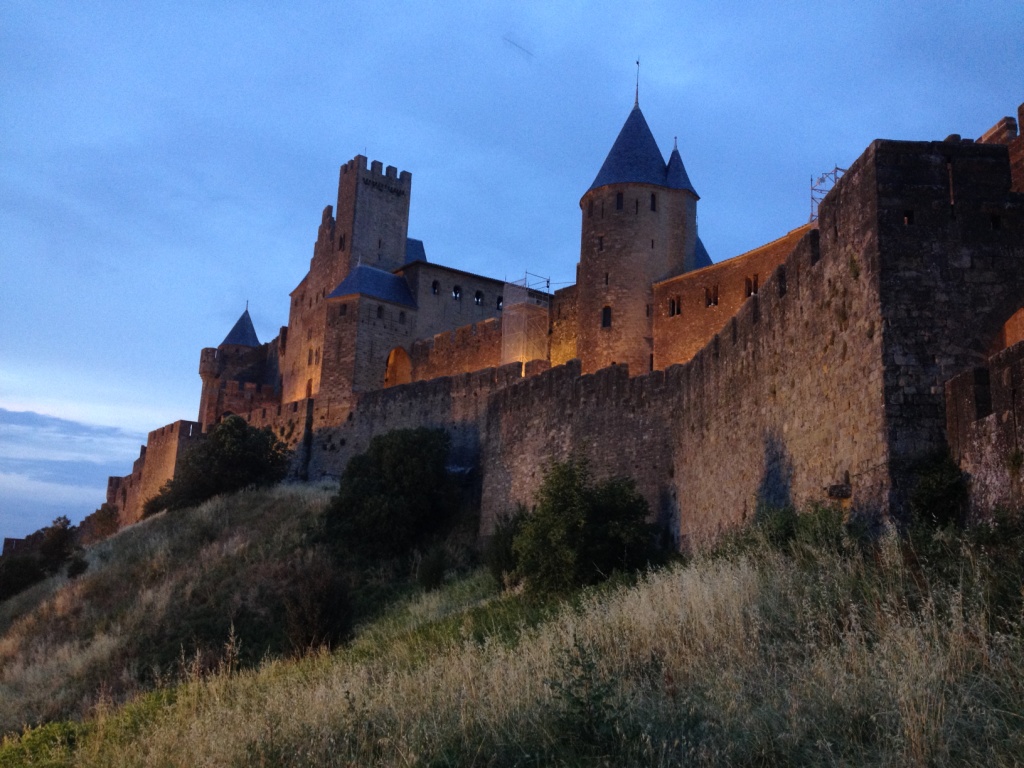
Need to buy a replica medieval helmet and sword? Fancy flouncing around in costume like a Kate Mosse character?  All this can be done whilst visiting the fortified city of Carcassonne, a UNESCO World Heritage site that’s up there at number 20 of France’s most visited sites.

In summer, the main town has a vibrant feel, with plenty of outdoor cafes and a stream of tourists eating ice cream as they wander to and from the fortifications of la cité. Boats will cruise you along the Canal du Midi and I once spent a couple of wonderful days cycling in both directions along the towpath – very bruised from bumping over the tree roots, but happy.

Now, on a Sunday in April, I zigzagged to avoid the dogsh*t as I walked through the shuttered town, and wondered why I’d come back. The town was dead, but did I really want to join the throngs of visitors up in the fortress?

Of course I did. From the Pont Vieux over the River Aude, the outer ring of the concentric fortifications looms up ahead on the opposite bank. There’s little indication that a portion of the 360,000 or so annual tourists are swarming around inside.

As I ducked past the costumed soldier at the Porte Narbonnaise,  the atmosphere became transformed from dead Sunday to Disney wonderland. Here almost everything was open, with shops selling souvenirs, jewellery, Marseille soap, furs, and more jewellery. Like many must-sees, Carcassonne is a casualty of what it offers in terms of impressive heritage. These fortifications date right back to the Roman occupation, and fans of Kate Mosse novels will know that the cité has an ominous history as a home of the persecuted Cathars, who were nevertheless expelled from there in the early 13th century. Perhaps some visitors are particularly drawn by whatever lies at the end of the ominous signs that point the way to les tortures.

Of more interest to me was a poster proclaiming that Carcassonne is the only town in Languedoc-Rousillon where Occitan is taught from Primary right through to High School. The term Occitan, or the langue d’oc, came into being in the 14th century to differentiate between the languages spoken in the south and the north of France. The langue d’oc, spoken where oc was the word for yes, is a legacy of the region’s proximity to Spain and Italy.

As a linguist, I view Occitan as an umbrella term, rather than a clearly defined, individual language. There are a number of related varieties within southern France, such as Languedocien and Gascon, all with the same Latin root, and all with few contemporary speakers. As I noted in my book, over 90% of the Ariège population in 1864 were speakers of Gascon, rather than French, yet hardly anyone can speak it there now.

But here in Carcassonne, pupils can choose from an entire curriculum in Occitan. And it’s about more than just maintaining the language of their ancestors. The similarities of Occitan to Catalan, Italian, Spanish and Portuguese mean that it’s a bridge to learning those other languages.

So, with all the crowds and consumerism, is Carcassonne worth a visit? It’s true that the narrow inner streets are crammed with people, but few seem to venture the short distance to the outer ramparts, where you gain a true perspective of the size of these fortifications.  From here there’s also a view that stretches across the terracotta rooftops of Carcassonne, and, if you’re lucky, a close-up of a banking Ryanair plane as it prepares to land.

Similarly, if you can pull yourself away from the busy Place Marcon, there are quiet squares where few venture, such as the Place St Jean, with its view across the ramparts. And as the darkness descends, so does the magic; the floodlit ramparts have an eerie quality, and there are restaurants on the side streets that’ll transport you from Disneyland back into gourmet France.

Best of all, responsible dog owners are greeted with free bags on arrival at the fortress. That means clean pavements.

In search of Dordogneshire: Bergerac in the time of Brexit

Back when I was researching English incomers in the Ariège Pyrenees, many people cited Dordogne as a kind of benchmark. It was a way to disassociate themselves from that stereotype of Little England:

‘I think people come here because they don’t want that Dordogne thing. They want to take part in the French culture. They don’t want the English on the doorstep all the time.’

So if Dordogne didn’t exist, perhaps it would be necessary for the English to invent it, to have something to identify against. We also appear to have invented an odd pronunciation – Dordoyn – that rhymes with groin rather than Sonya. I wonder where that came from?

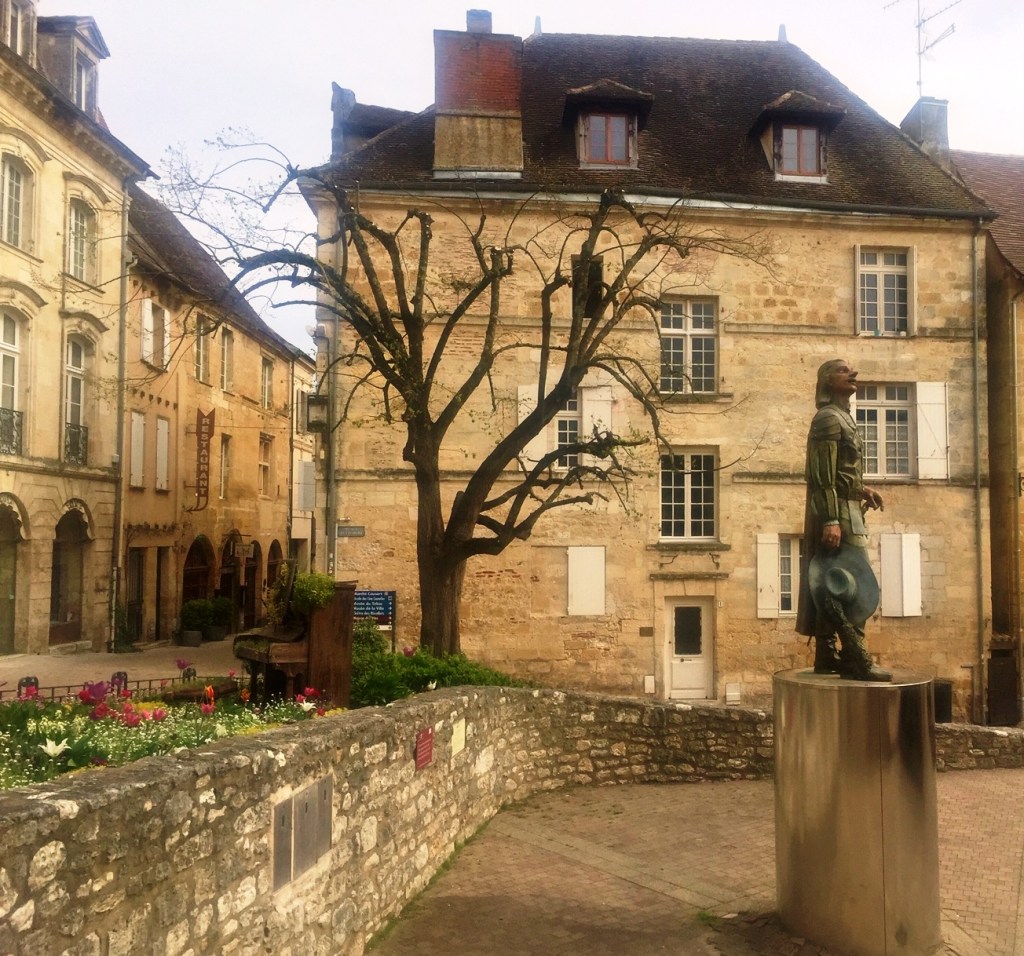
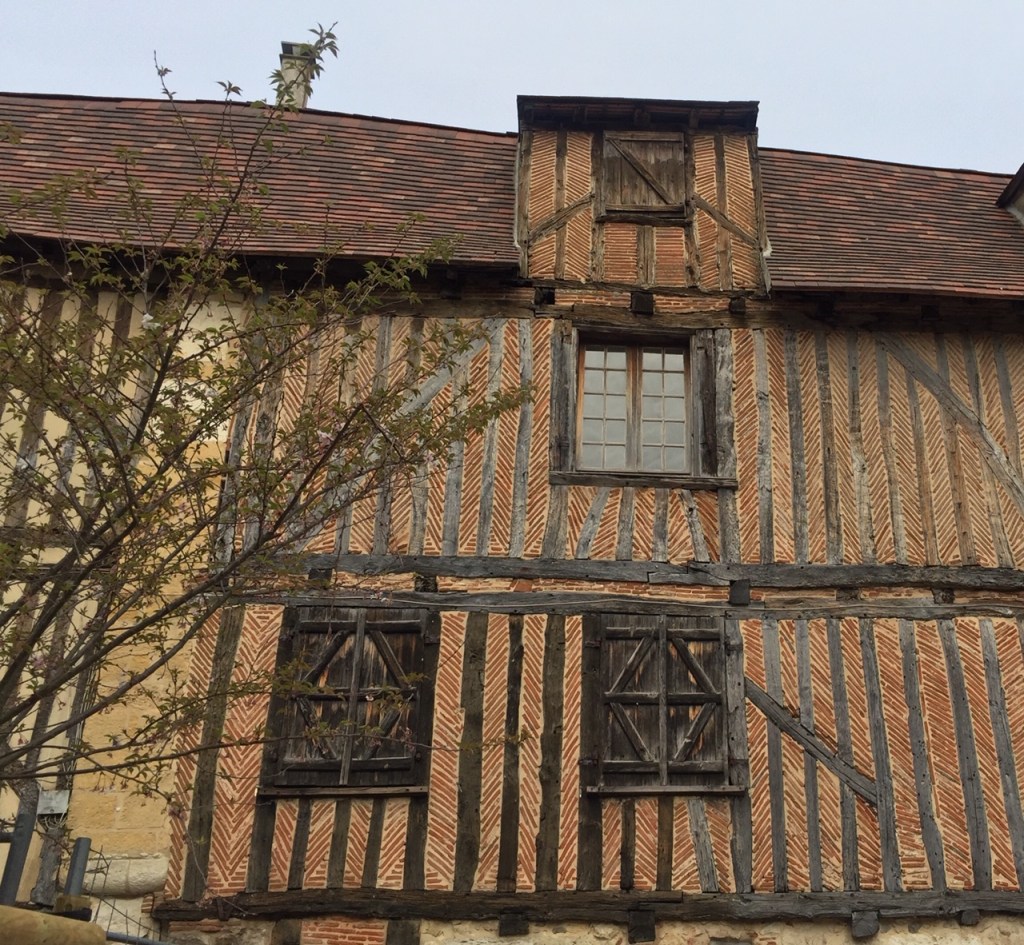
Anyway, my pursuit of Dordogneshire began with just 32 euros for a five hour journey from Carcassonne to Bergerac. After a heart-sinkingly dull approach to the famed wine town, my spirits picked up as soon as I wandered around the half-timbered buildings that line the narrow alleys of Bergerac’s medieval centre.

The Musée de la Ville tells how the Brits were once the principal buyers of the area’s wine, with a preference for a rather weak rosé. That was until the 18th century, when the Dutch market replaced the British and led the vintners to produce stronger reds.

On hearing I was from England, the museum officer immediately asked if I was one of the 8,000 Brits who lived in the Périgord region. Apparently they mostly live in the hilltop bastide towns rather than Bergerac itself. Predictably, the second question was about Brexit – pff! – which gave me an opportunity to use all six of the words for crazy I’ve learned.

Being early April, many restaurants remained closed, but I found one that was sufficiently intimate to strike up a conversation with the woman at the next table: a Dutch woman who’d just begun a 10-week hike to Santiago de Compostela. She was walking the pilgrim’s Way of St James.

“And you, you’re fleeing Brexit?” I ignored the snorts of laughter from the other tables and asked her about The Way. She described it as a metaphor for living: how you cope with the walk can reflect how you live your life.

According to her, Le Brexit is also metaphorical; we can’t physically leave Europe, as Britain shares the same tectonic plate as the continent.

The next day I joined the Pilgrim for a Dordogne river cruise on one of the old gabarres boats. Sadly, we waited in vain for enough people to turn up to make the required number. But the guide entertained us for a whole hour with a commentary on just about everything, such as the lift in the river to help the salmon get upstream, and les Anglais, of whom he seemed fond. Mais le Brexit, pff!

The next day, standing in the airport queue, I wondered if he’d come across the English man in front of me. Mr No Deal smiled vacantly while another, very patient, English man tried to explain what ‘trade’ is, and why the local police force not being any good isn’t a reason to leave the EU. I had an urge to tell Mr No Deal about the tectonic plate, as I had an idea he’d turn up with his tools to dig us to victory, I mean freedom. Let us take back control of our tectonic plate, so we can float away into a sovereign sunset!

In summer Bergerac must feel very different when the narrow cobbles ring to the footsteps of the visitors, but it’s not Dordogneshire. Almost all of the very detailed heritage information signs were in French only, and so were those in the museum. There wasn’t an English menu to be seen either. The only English I heard was in response to the Pilgrim asking for tea in a wine bar: Madame, you’ve come to the wrong place!

On the last night I hugged the Pilgrim goodbye and wished her luck, feeling envious. I liked Bergerac and I didn’t really want to leave, and that was probably because I hadn’t found Dordogneshire.

But there, at the tiny airport, were the clues. A large estate agency instead of a duty free shop, and posters advertising relocation services and English renovation architects. The English are all upstream, like the salmon. That gives me a reason to come back. Pff!  

Jardins de la Fontaine, Nîmes

A stopover in Nîmes: slow travel in the South of France.

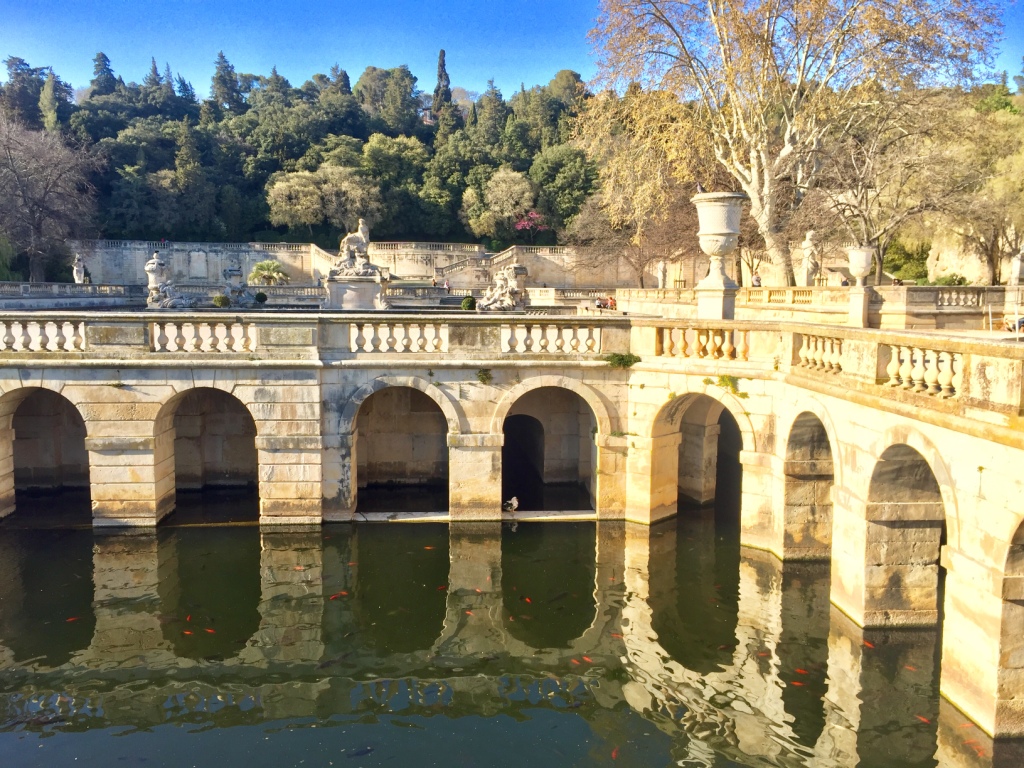
It’s the first day of spring, although the Jardins de la Fontaine smell more like early summer. Half the population of Nîmes is sitting on the lawns of the 17th century park, like the Uber Eats cyclist taking a break, and the other half are in the outdoor cafes of the old town. I walk up the balustraded stairways and look down at the fat orange fish in the ornamental ponds until my eyes are drawn to vivid purple amongst the green.

A path leads up through the pine woods to the highest point in Nîmes and the oldest of the Roman sites, the Tour Magne. From the top of the tower the line of the Via Domitia, built by the Romans to link the Alps with the Pyrenees, still carves through the city.

From up here you gain a true perspective of the Arènes de Nîmes – a gigantic bowl of a Roman amphitheatre with 34 rows of seats that rise up and outwards.

As I leave the Tour Magne, four police officers amble up to it. France is on alert with the Gilets Jaunes demos, but these four act more like curious tourists than law enforcers. I see them again and again that afternoon, wandering round and smiling, looking at things rather than people.

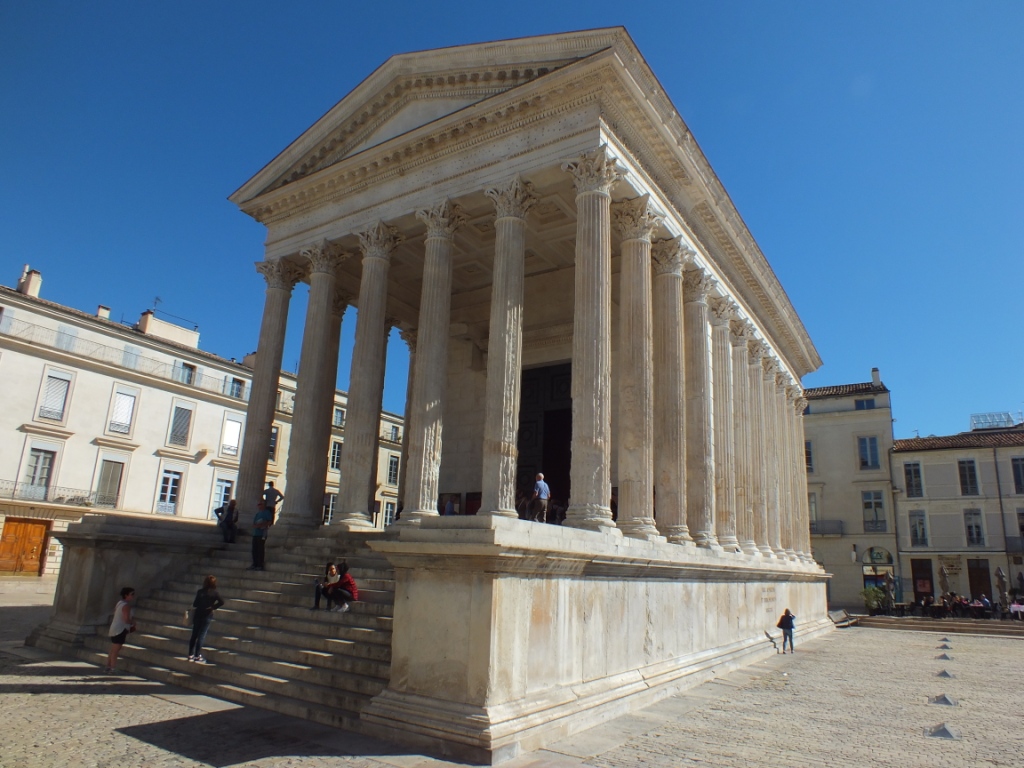
Crossing the road back into the pedestrianised old town, it’s a surprise to come face to face with one of the best preserved temples from the Roman world, right here in the middle of Nîmes.  The Maison Carrée has been a centrepoint of the city for almost 2,000 years.

It’s 6pm and still hot so I go into the Amorino ice cream shop where they carve my scoops into flower petals and politely check that I understand that lime basilic comes with basil as well as lime. As I step out of the shop I almost collide with a very elderly man in violently patterned shorts. He barks at me in a strangulated voice, in a language that could be English.

Darkness falls and it’s time to join everyone else eating outdoors. I choose a table opposite a narrow alley with a view through to the massive grey stones of the amphitheatre.  16 euros to sit here under the still-swollen moon, with a duck burger du Perigord and a small pichet of white wine; a bargain.

Taking the Eurostar from London to Avignon? Nîmes is just an hour or so by frequent train service from Avignon central. See Loco2 for times and tickets.

All of the Roman sites can be visited. Read more about visiting Nîmes here.

Ivano-Frankivsk from the town hall viewing platform

Track changes, eastward bound: London to Western Ukraine by train

When I booked the eight trains spanning four days of travel from London to the formerly Polish ancestral village of my father (now lying within western Ukraine), I hadn’t realised that I’d be following the same route, more or less, that my father had driven us as a family in the late 1960s.

A wartime Polish exile, unable to visit his real homeland when it became part of the USSR, he would drive us to Poland as a second-best option. Back then it involved what my nervous mother referred to as ‘going behind the Iron Curtain’ that divided the West from the communist East. I remember hours standing next to the car at checkpoints as unsmiling DDR border guards pulled out the back seat and slid mirrors beneath the chassis. Long days were spent driving along the transit corridor through the forests of East Germany and Poland, where small crowds would gather whenever we stopped, and I had the job of handing out sweets and oranges to the wide-eyed children.

Some fifty years later I decided to travel east again, although this time it was possible to keep going into Ukraine, to the town closest to my dad’s village – the town of Ivano-Frankivsk, closed off by the Soviets until the early 1990s.

The lack of direct flights to western Ukraine gave a good excuse to do it by train.  Ryanair’s forthcoming route to Lviv will win for speed and price, but a couple of hours strapped into a budget aircraft will hardly convey the same sense of travelling through central Europe to the east.  And a train trip encourages some wonderfully atmospheric stopovers. Just don’t expect it to be restful.

Continue reading “Track changes, eastward bound: London to Western Ukraine by train”

A hike to Étang de Guzet and Cascade d’Ars in the French Pyrenees

Escape the crowds and discover a secluded mountain lake in the unspoiled Ariège region of the French Pyrenees

The triple waterfalls of Cascade d’Ars are deservedly well known, but it’s possible to make a longer round walk that takes in the étang de Guzet. Or, if you’ve already walked to the falls, a hike up to this beautiful hidden lake itself is well worth it, and it avoids the crowds that tend to stick to the falls.

Etang de Guzet
Etang de Guzet

I started from the car park in Aulus les Bains and walked a short way up the D8F towards the Col de Latrape.  Ignore the left turn to the Cascade and soon afterwards you take a path up to the left, heading steeply up through the forest and crossing the forest track at one point. 

Eventually you come out into the open Plateau de Souliou with a view of the cirque of Pic de Mont Rouge ahead (image 1 below). Look over to your right and you’ll see the lifts of the Guzet ski resort, as well as Pics de Cerda and Freychet (image 2).

Then continue to follow signs for the étang de Guzet, climbing up through the woods until you see a marked path down on the right to the lake shore.  It’s a tranquil spot.  Look out for the twin ‘claw’ summit of Pic de Crabe (image 3) reflected in the water.

Continue reading “A hike to Étang de Guzet and Cascade d’Ars in the French Pyrenees”

How to climb Tuc de la Coume, Le Port, Ariège French Pyrenees

A long ridge with a stunning panorama. But it’s not easy to find a route on the map.

For years I’ve gazed at this summit (image 1), wondering how to get there as there’s no direct path marked on the maps. It’s a relatively easy summit on a long ridge that lies between the valley of the Garbet (the section running from Ercé to Aulus) and the Courtignou valley (the D18) from Massat up to the étang de Lers.

At 1745m it’s not especially high but you get a 360 degree panorama of both the summit chain and the surrounding valleys. The final bit is steep and the tiny summit feels somewhat exposed, especially when peering down the scarp of the eastern flank.

The route I’ve given starts at the étang de Lers (between Le Port and Aulus).

Continue reading “How to climb Tuc de la Coume, Le Port, Ariège French Pyrenees”