From Baltic to Balkans: Crossing Europe north to south by rail

In May 2023 I travelled from Lithuania to Croatia by train. It’s an epic route from northern to southern Europe and I used an Interrail/Eurail Global pass. How did that turn out? Well, it spawned an article on how not to plan an Interrail trip. It’s all explained in my article on the Go Nomad travel website.

For now, let’s forget the whole rail pass thing and look at the trip from Lithuania to Croatia by train. I’ve included details of accommodation but only those I’d re-book and recommend. These are affiliate links that may grant me a small commission if you book through the links, at no cost to you.

Exploring Vilnius and Kaunas

Arriving in Vilnius, the UNESCO-protected old town had a lively ambience that felt far from the dense crowds plaguing many other European cities on the weekend-break circuit. My bed was in the heart of the UNESCO-protected old town, a former monastery cell in the Domus Maria hotel.
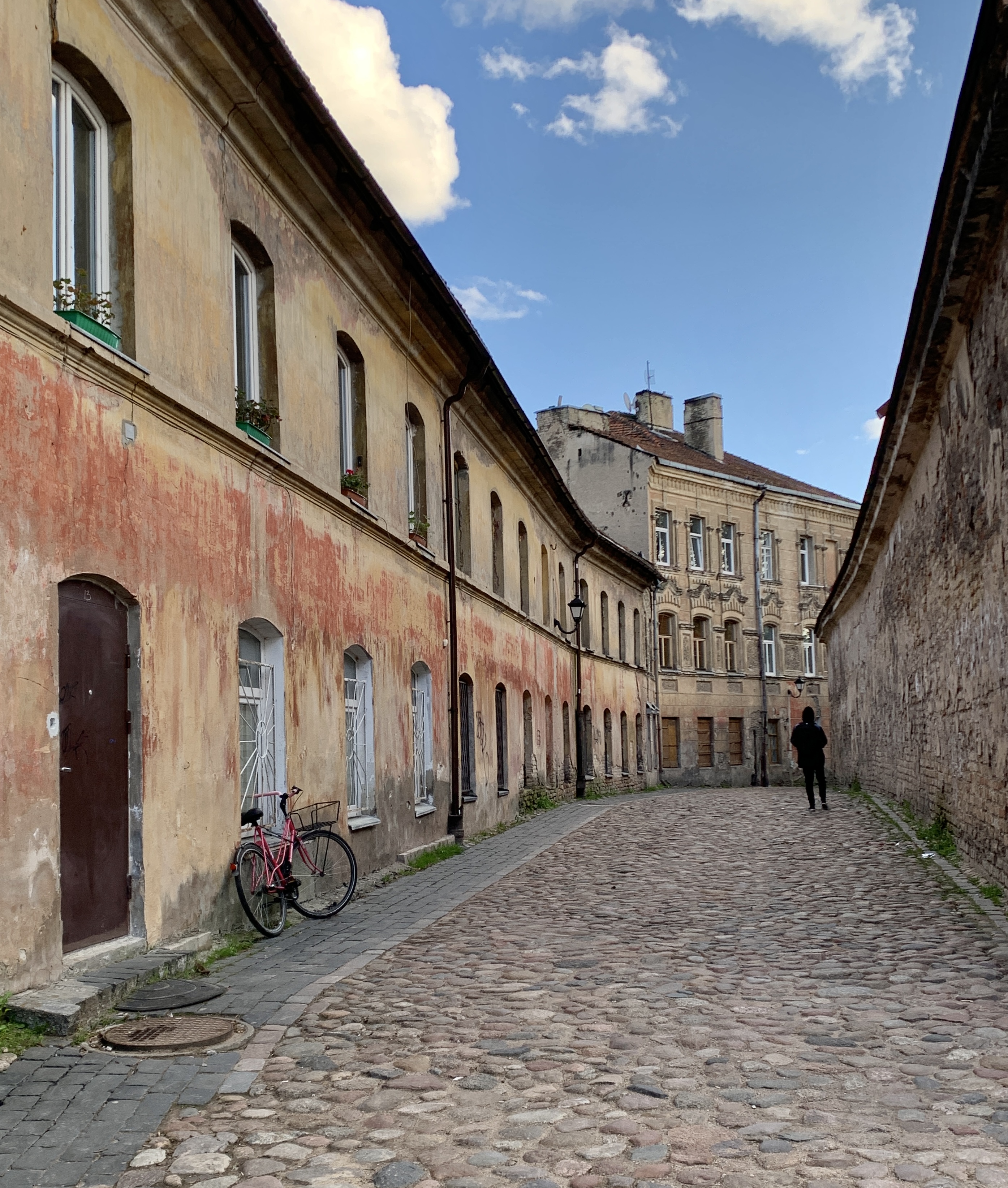
It was a short rail trip to Kaunas, Lithuania’s second city. Once again, it was a novelty to walk around a city without weaving through crowds of tourists. I spent a peaceful night in the Best Western Santakos hotel, close to the old town.

Lithuania to Poland on the new Rail Baltica connection

The new international connection from Kaunas to Warsaw took seven hours, including a change of trains at the border at Mockva. Then add an hour to account for Lithuania being an hour in front of Poland.

Either side of the Tatra Mountains

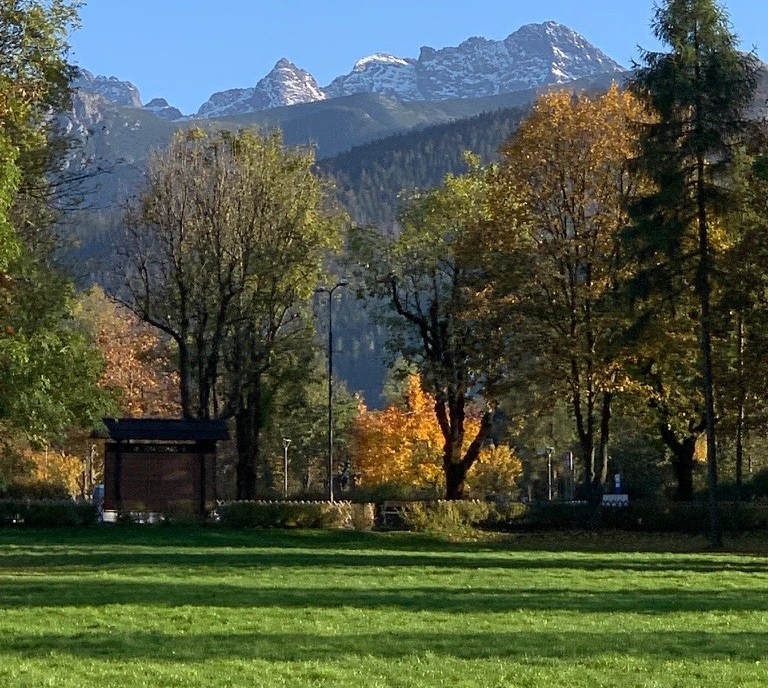
Trains from Warsaw via Krakow sped me to Zakopane, Poland’s most popular mountain resort. There was so much snow that people were still skiing on the upper slopes, so I followed a line of hikers up, anxious that the increasing snow cover would make it difficult to get back down without crampons. But most other people were clad like me, in normal hiking boots, apart from the man wearing open sandals.

My destination was the Gąsienicowy meadows, a familiar image that graces Zakopane’s postcards, hiking routes and tourist websites. I was keen to stand among those green meadows dotted with pink wildflowers and cute wooden cabins, with a jagged grey mountain backdrop. But the lingering snow left it an unrecognisable monochrome with patches of rotting brown foliage. Even the peaks were smothered in thick cloud. Only hours later did the mountains emerge, when I rode the funicular up the other side of the valley.

This time I stayed in the Hotel Logos, which I’d recommend as it’s in a peaceful location but a mere 5 minute walk across the park to the main streets.

Exploring Slovakia by train

Avoiding a 2-day roundabout train route, I took the bus to the southern Slovakian side, spending a few days riding the electric trains running across the southern Tatra slopes. Then most of a day was spent riding four trains north-east to where Slovakia borders Poland and Ukraine. The first hours followed the scenic Hornád river, then a long wait at spooky Prešov station. Outside was a coffee and falafel stall, where the Middle Eastern owner crisped the falafel and asked about the latte. “It’s a new machine, used for the first time today. I bought the best I could,” he said. In the time it took to cook and eat the falafel, I was his only customer.

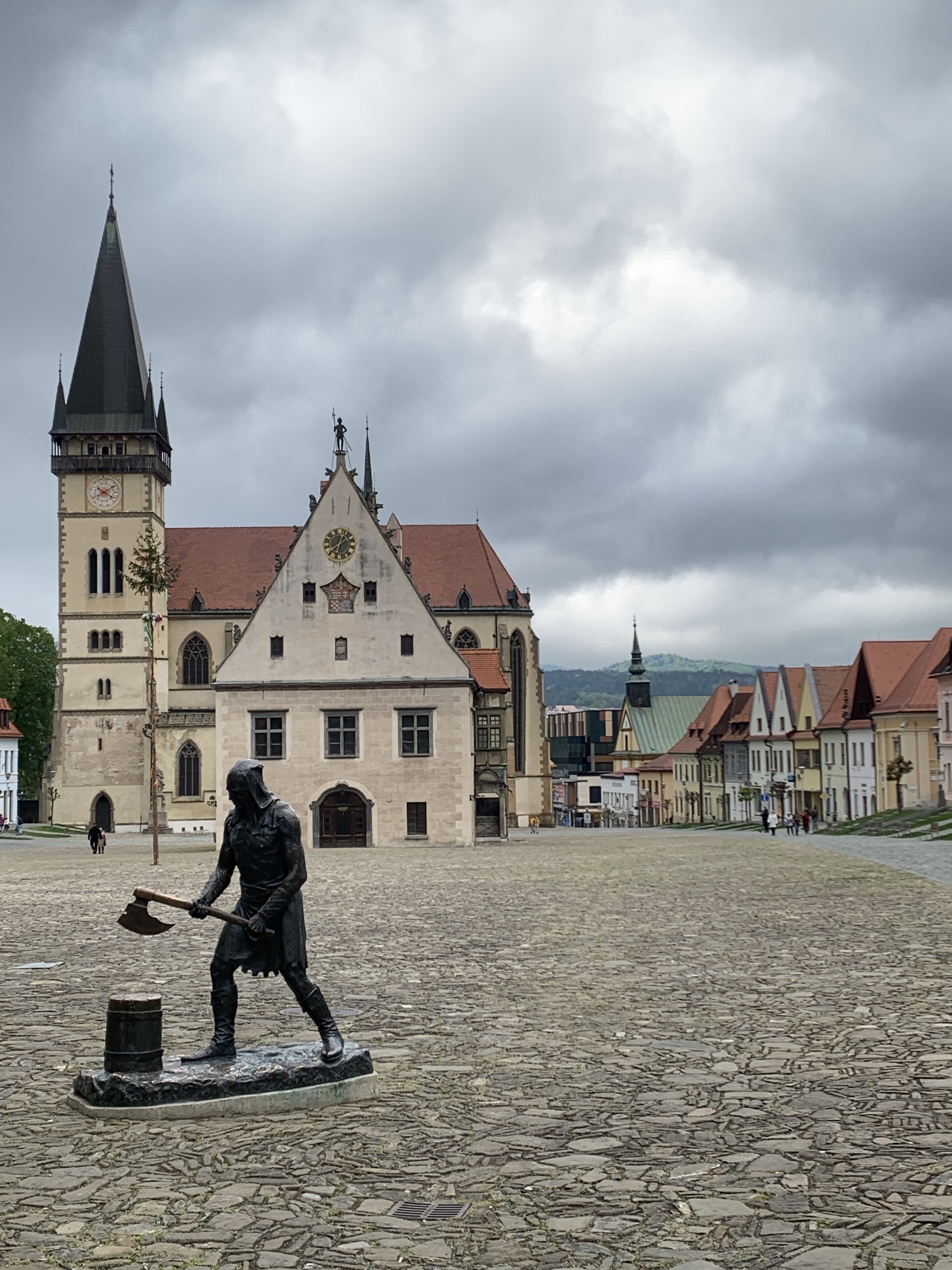
Bardejov’s UNESCO World Heritage square was so cold I layered up with almost every item of clothing in the backpack. I stayed at the Bardejov Kulturne Centrum, right in the main square and with prices from the last century.

Hungary, where everyone can once again feel at home

In Budapest the castle district was horribly crowded and the cafes all had queues. But few bothered to walk beyond the main tourist epicentre, perhaps put off by the enormous building site of the National Hauszmann Program. This extensive project is restoring Buda Castle to its previous glory after decades of post-war neglect. Hoardings tell how the current government is finally making up for the Communist indifference.

But it’s not just about architecture. It’s a project to symbolise Hungarian national identity, “to conjure up a place in the centre of the capital where everyone can once again feel at home”. The aim is to “return the castle to Hungarian people”. That hardly makes sense when the castle district is swarming with foreign tourists.

Hungary’s politics are increasingly nationalistic and authoritarian thanks to Prime Minister Orban. The previous day a former journalist told me how he’d left the job as it no longer involved writing news – “just propaganda”. Locals have replied to the official anti-Nazi war memorial (an eagle) with reminders that Hungary wasn’t always on the right side of history as far as the Jewish population was concerned.

From Lake Balaton to Croatia

The international train from Budapest to Zagreb followed the eastern shore of Lake Balaton, stopping at tiny stations and roadside halts over the six hours.

Zagreb was dark and rainy. Graffiti at the end of the station underpass greeted me with “God help us”. Ominous or what? Then my expectations were confounded as the station hall was filled with an enormous bookstall, still open at 10pm. A city that takes reading seriously!

The Hotel Central was no-frills but extremely convenient for a late arrival, being close to the station.

A morning in Zagreb confirmed it was an attractive city with narrow backstreets running through the old town, although churches were still closed due to earthquake damage. There’s an intriguing and poignant Museum of Broken relationships that’s exactly what it says.

The final train, to Split, was basic with no apparent refreshments, although beers appeared now and then from a secret stash. The isolated high land we crossed was spectacular, framed by a snow-capped grey mountain wall. We were running along the single-track Lika line, a battleground in the Homeland war of the 1990s, and some of the stations were collapsed shells. At one point my mobile thought I was in Bosnia. It was the most spectacular and memorable trip of the entire journey.

Swinging in Dalmatia

After a morning weaving through zombie-like cruise passengers around Split, I escaped to Trogir, yet another UNESCO town. Trogir sits on an island, built on Greek and Roman foundations with Venetian influences. History’s all around, from the bench constructed from ancient columns, to the photographs of 32 locals who died in the recent war between 1991-95 (go through the door below the clock tower in the main square).
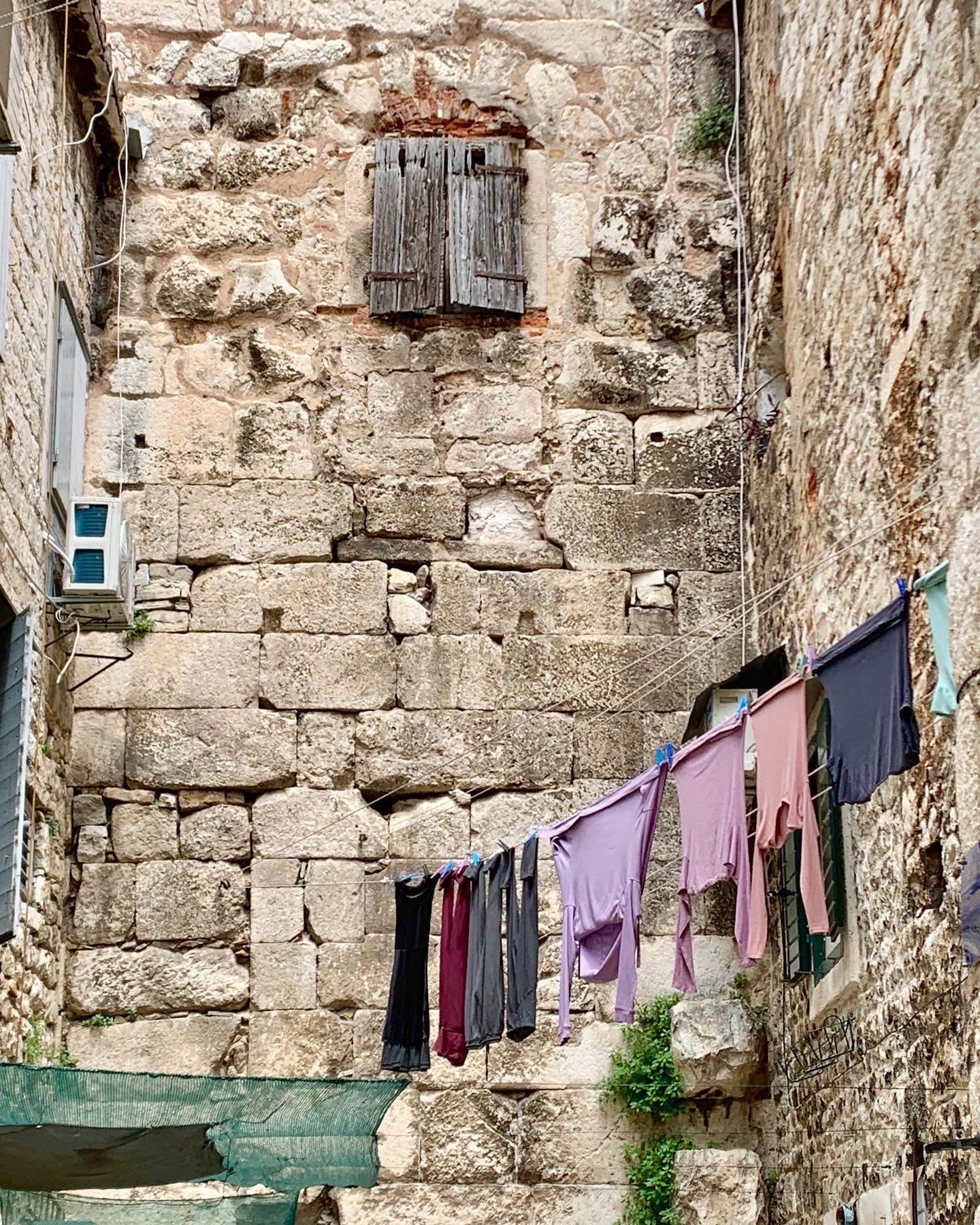
The bus south followed a serpentine coastal road towards Dubrovnik, my final destination. But before hitting the crowds in Dubrovnik I needed to rest and gather my wits.

The fishing village of Gradac was a perfect choice as it lies halfway between Split and Dubrovnik. Even better, it barely features on tourist itineraries. And Danijela’s Apartment Like Home was just perfect for a woman travelling solo.

The price of ice cream is a good indicator of the level of commercialisation. At 1.50 euros per scoop, Gradac welcomes its visitors but doesn’t lean towards pretentiousness. Within an hour of arriving I’d already made plans to return. For longer.

Gradac has a swing on the beach. Instagrammers and wedding couples no doubt love the swing but fortunately they never made an appearance. That left me to swing morning, afternoon and night until it was time to leave.

This was an epic trip, no doubt, via some of Europe’s great cities. But I’ll never forget discovering a place that’s not even mentioned in the Lonely Planet guide. Evenings were the best, swinging myself back to my childhood, accompanied by the lights of the shoreline and the blaze of orange from the church above the tiny harbour.

Fearful of travelling alone? Overcome anxiety and enjoy the freedom of #solotravel as a lone female

Tips for exploring Europe independently as a solo female traveller

It must be difficult travelling alone as a woman

Someone said that to me a few years back. Where to start with answering it?

I first began travelling by myself in the 1980s, on solo Interrail trips. I also travel with family members, but there’s something magical about hoisting on the backpack and stepping onto a plane, train or bus. It’s partly the complete freedom to follow my own instincts rather than compromise.

Covered walkway in Florence, italy
Wandering the backstreets of Pisa, Italy

Travelling solo isn’t for everyone. You need to be self-sufficient, to enjoy your own company and not be fazed by solving problems on your own. But it’s not all about negative aspects. According to this BBC article, 2023 has seen double the number of people Googling “solo travel” compared to 2018.

Travelling solo can bring tremendous benefits. Here are those that work for me:

  1. The freedom to do what you want to do. Your idea of “making the most of a place”, “living your best life” or whatever cliché comes to mind could differ from your travel companion’s priorities. Perhaps you like to seek out the best café rather than the best bar. Or you enjoy popping into local restaurants rather than queuing for the #1 on TripAdvisor. Or your partner doesn’t see the point of simply wandering the streets. Travel alone and you can follow your own instincts.

  2. You’ll get the chance for personal reflection as you disconnect from your other life. I get my best ideas when I’m alone in a new place. Perhaps you’ll discover new things about yourself.

  3. See the culture and the people through your own lens, not that of a companion. Alone, you’ll experience it all from the inside, with no one else’s perspectives seeping into yours.

  4. Travelling solo could help build your confidence. Navigating new situations and places can instil a sense of self-esteem if you discover you’re more competent than you ever imagined.

  5. You may find local people are more willing to talk to you. Travelling as a couple, you’re a self-contained unit that outsiders may be unwilling to disturb. When I returned to Ukraine alone, so many people stopped to ask me where I was from or what I was looking for. I was even invited to join a group of friends on a kayak. Nothing like that happened the previous year when I was with a companion.
River Smotrych, Kamyanets-Podilsky, Ukraine
An invitation to kayak, Ukraine

All of this is what drives me to travel – and to plan the next trip as soon as I’m back home. But like most people, I also get anxious when travelling alone. Here is how I’ve overcome the challenges of solo travel.

Fear of the unknown

This is really a blessing in disguise – after all, isn’t discovery at the heart of why we travel? Interrailing in the pre-internet days, I sometimes found myself in a place with no visitor facilities, just open-mouthed locals. Like Mondim de Basto in northern Portugal – the station led me into someone’s garden where a family stared without smiling. The hotel was temporarily closed, but a stranger led me to a house where female teachers lodged, excited to have a foreigner staying with them.

Nowadays, almost everywhere in Europe is mentioned on a blog post and on accommodation booking sites. And map apps familiarise you with the street layout. But don’t limit yourself to research via blog posts or even guide books. Travel literature, or travelogues, combine personal observations with factual information about the places visited. Try searching the Travel Writing genre on Amazon or in a bookstore. Or see the recommendations on the Trip Fiction website, where you can search for books featuring a destination.

Worrying about “the language barrier”

I don’t like the word “barrier” here. It implies that language is a deterrent, a way to block rather than a means to communicate. But speaking a common language isn’t the only way to communicate. And it’s uncommon these days to land up in a location where no one speaks English.

Back in the 1980s, it was rare to come across an English speaker in rural areas and countries such as Hungary and Czechoslovakia. My diaries from those rail trips are filled with essential words and pronunciation notes for Hungarian, Portuguese, Czech and Finnish. Learning a few dozen words in advance really helped. And basic French and German was useful as a lingua franca.

Learning Hungarian in Tihany, 1986

Even watching a few YouTube lessons makes you familiar with the sounds of a language. Download the Duolingo app – handy for those long rail journeys. Make sure your phone has a translation app, too, such as Google Translate or Say Hi.

Anxiety about getting stranded when travelling

With transport strikes, delays and cancellations, not to mention extreme weather events, this is always a possibility. And of course it feels worse when you’re alone, but it shouldn’t put you off setting out. Make sure your travel insurance covers multiple-stop itineraries – I once had a claim rejected as it wasn’t a straightforward two-stage out-and-back journey.

An accommodation app is crucial for last-minute bookings (I’ve found booking.com to be the most helpful for me). Rail Europe is pretty comprehensive for train timetables, although the Interrail/Eurail Rail Planner app is my go-to, whether I’m using a rail pass or not.

Even if you intend to use trains rather than buses, it’s a good idea to download a bus app, such as Flixbus, for when the trains let you down. Flixbus saved me when I got thrown off a Polish rail replacement bus for not having a seat reservation. Within 10 minutes I had a mobile Flixbus ticket that got me to Zakopane the same afternoon. Flixbus has a pretty extensive route system across Europe, with tickets available via their website as well as the app.

Zakopane
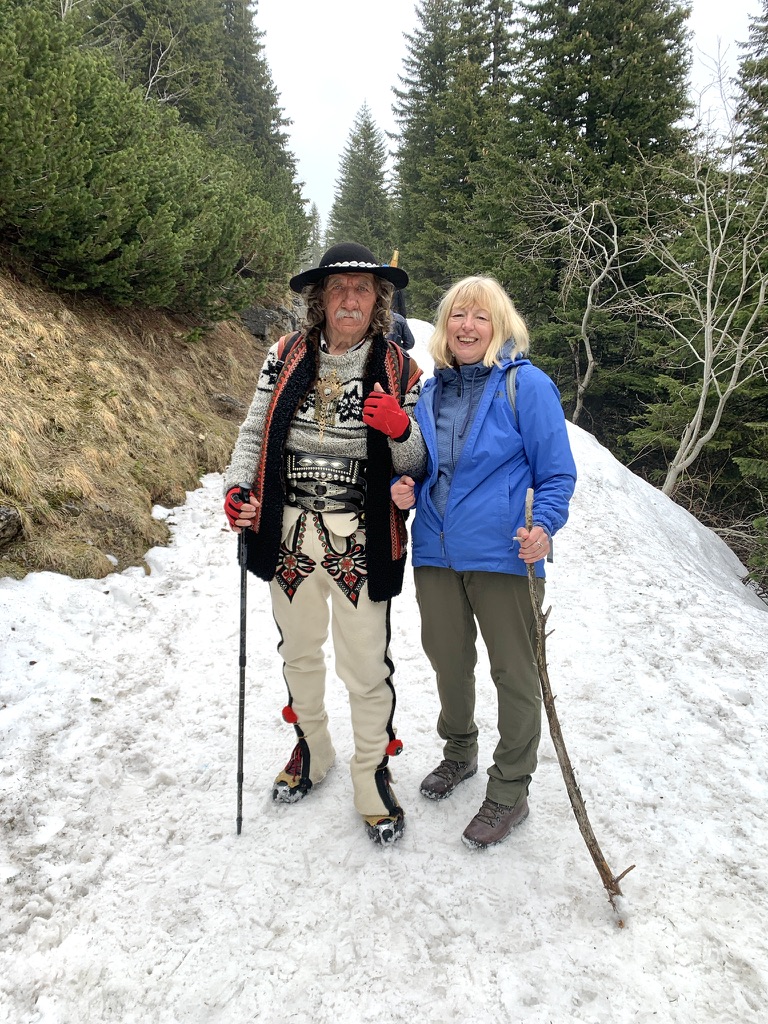
You never know who’ll you meet when travelling solo in Zakopane

Another app which has helped reduce financial anxiety is the Wise card. It’s a multicurrency account that I use to save for my trips and transfer currencies with low fees. There’s a digital card but I prefer a physical card for drawing out cash. Wise has saved me heaps on exchange fees and the account allows me to save up (and even get paid) in a specific currency. Such flexibility has transformed the ease of travel.

How to keep safe when travelling solo?

As the BBC article notes, female travellers are more alert and conscious of their safety. There are sites out there with information about basic self-defence techniques, and I won’t repeat them here. But I do have a few other rules I’ve relied on over the years to stay safe and confident.

  1. Keep connected with people back home. If you don’t have internet roaming, then consider purchasing a local/Europe-wide SIM card. Write up your travel itinerary and share it as a Google doc, keeping it updated.

  2. Stay aware of your surroundings and try to walk as if you know where you’re going. That way you’ll look like a local rather than a confused tourist. When people ask me for directions, I know I’ve got it right.

  3. Research your destination for any security quirks. Certain cities become renowned as phone-snatching hotspots because of the opportunities on offer.

  4. It makes sense to avoid travelling alone at night, although this isn’t always possible. On a recent Interrail trip I had three long-distance journeys using services that arrived after nightfall – annoying, but unavoidable as there was only one daily train. For each one I booked accommodation within sight of the station and memorised the route or drew an inconspicuous map.

How to avoid being lonely when travelling solo

It happens. One way to get a dose of conversation is by booking a walking tour. The GuruWalk website lists free walking tours worldwide. You might get talking to someone on the tour, although in my experience the other travellers are often couples, wrapped up in themselves. Fortunately, the guides will be happy to talk with you, and what better way to glean local detail?

What about the growing trend for food walking tours? Even preoccupied couples can’t avoid joining in as everyone sits around a table eating and drinking. This tour in Budapest got us all talking as we sampled strudel, goulash and other specialities. It was also a fascinating insight into life in today’s Budapest.

Strudel in Budapest
Cabbage, poppy seed, cheese and cherry strudel in Budapest

Sites such as Meet Up offer useful databases of activities wherever you happen to be.

Hotels, I’ve found, can be lonely. Airbnb rooms give opportunities to interact with owners, but if you prefer more privacy, try searching apartment reviews for mentions of friendly on-site owners.

I wished I’d done that in Budapest, rather than interacting with a key box and messaging a faceless owner when the gas didn’t work. Fortunately I then moved onto Croatia, where every owner was onsite, female and exceptionally friendly. In Split at check-out time I was rewarded with coffee and a chat at the kitchen table. In Trogir the owner checked in on me regularly and gave me an impromptu guide to the UNESCO landmarks from the roof balcony. And in Gradac, Danijela insisted on meeting me at the bus stop, then handed over home-made muffins and liqueur.

Trogir, Croatia
View of Trogir, Croatia, from the apartment balcony

For nights when you just want to feel at home, there’s always Netflix … the extra weight of a tablet can be worth it. Especially when it rains.

Gdańsk
Happily unaccompanied in Gdańsk

Note that some – but not all – of the links above are affiliate links, and only to services that I’ve personally enjoyed and feel I could recommend. This means I may get a small commission if you make a purchase through the links, at no cost to you.

Keen to know more about travelling solo as a woman? Try the Journey Woman website, a comprehensive source of tips and articles aimed at solo women aged 50+.

St Moritz

Make the Most of an Interrail or Eurail Pass with this Route

Following on from the previous post with tips for using a Global Interrail Pass (or Eurail for non-European residents), here’s a month’s Interrail route that makes great use of a flexible Europe-wide pass. On the whole it avoids countries that require seat bookings and supplements. All journeys were free with the pass apart from the the short ride from Jenback to Fügen (Austria) and the Swiss Bernese Oberland mountain railways/cable cars (the Interrail gave a 25% discount though).

Disclosure: This post contain affiliate links to accommodation that I’ve personally experienced and enjoyed. This means I get a small commission if you make a purchase through the links, at no cost to you.

Travel day 1 | Using the rail pass from London

From Devon, UK to Namur, Belgium. This was as far as we could comfortably travel whilst avoiding an expensive overnight in Brussels. It also avoided routes into Germany that were somewhat unreliable at the time. Namur is cheaper than Brussels and has a bar called Barnabeer with 47 beer pulls!

We stayed in BED Namur-Premium at the start and end of our trip. It’s a self-check-in property with a shared kitchen.

Travel day 2 | Belgium to Luxembourg by train

Namur to Luxembourg. Back when I was a tour guide in the 1990s, our coaches often diverted to Luxembourg to fuel up with cheap diesel. In frustration I’d gaze out at the city clustered above, below and along the edges of a deep river gorge, unable to leap off and explore. Now, after all those trains, it was a pleasure to walk this charming city. You can make use of elevators to move between the upper town and the valley.

We spent the night in the central Auberge Gaglioti, which was fine and fairly central in the new town. Luxembourg isn’t hot on budget accommodation.

Travel day 3 | Luxembourg to Strasbourg using trains

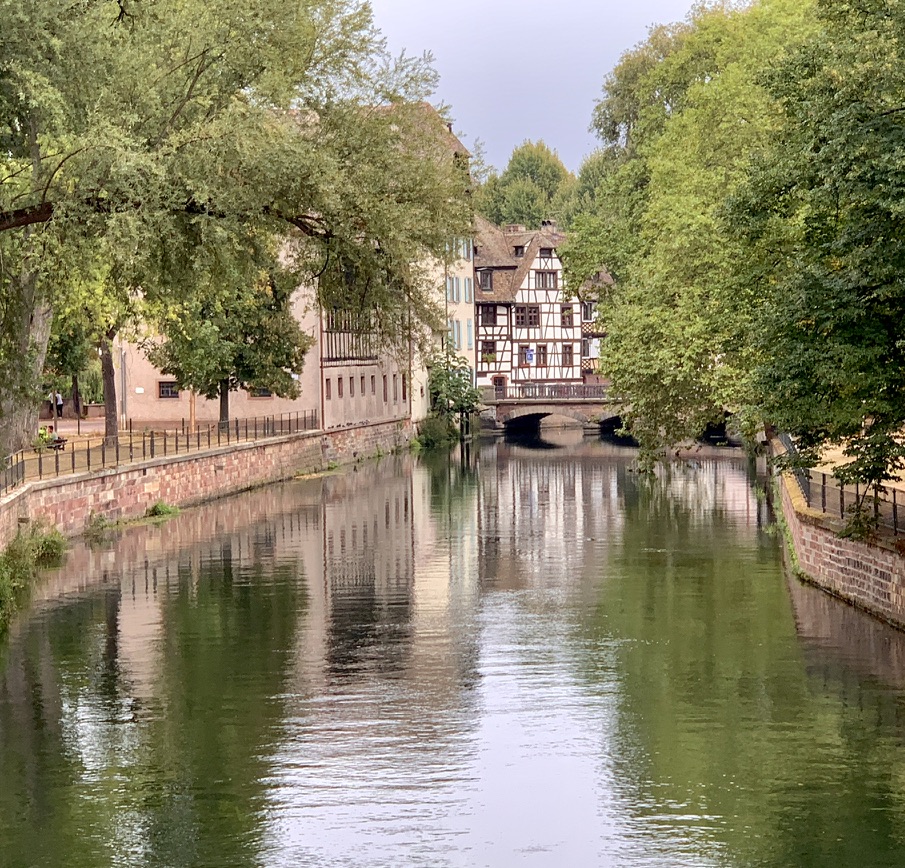
Luxembourg to Strasbourg (France). Strasbourg was a morning stop on our 1990s coach tours, although there wouldn’t be time for more than a quick stroll around the waterways and 16th century buildings of Petite France and a glimpse of the Cathedral’s astronomical clock.

Nowadays Petite France is busier, but no less enchanting . . . even when the peace was broken by a guitarist practising Wish You Were Here, the chords flying out of an open window on the upper floor of a half-timbered building.

We found the Aparthotel Adagio to be a good place to stay – out of the main buzz but still close to the centre. The mini kitchen in the room is a bonus when you’re on an extended trip.

Continue reading “Make the Most of an Interrail or Eurail Pass with this Route”
Swiss railway at the foot of the Eiger

Ten Tips for using an Interrail or Eurail Train Pass

A long time ago in Lisbon, on what I thought would be my final Interrail trip, I celebrated my 26th birthday. According to my diary, the hostel wardens gave me a beer and a group of Australians bought me a glass of port wine.

Back then the month-long Interrail pass was limited to youngsters. Not any more! And now you can buy a pass limited to specific countries and lengths of time. You can even get Interrail to plan your trip for you, including accommodation. Note that Eurail is the same pass but for those of you who live outside Europe.

But I’ve always dreamed of returning to the freedom of a ‘global’ pass that’s valid across Europe. This year, celebrating 50 years of Interrail, the global Interrail pass was briefly discounted to half price. And adding a second month cost a mere £22 extra for a senior!

Two months of rail travel gave me the freedom to visit new places as well as embark on a memory trip. As well as interrailing in my youth, I’d also worked as a travel guide/ski rep in Europe. I used the rail pass to revisit a few places I continue to dream about some 30-odd years later.

The second month was used to revisit Poland some 50+ years after my Polish father drove us there for holidays.

10 tips for smooth Interrailing
Here are some practical tips that I picked up for using the mobile pass (the next post gives a brief guide to the first month’s route). Some people swear by using the old paper Interrail pass, but I’m a fan of the mobile pass, which uses the Rail Planner app.

Eurail is the version of Interrail for those of you who don’t live in Europe. You may find this post by GoNomad useful if considering a Eurail pass.

Continue reading “Ten Tips for using an Interrail or Eurail Train Pass”
Wooden Zakopane sign

Why visit Zakopane in the Polish Tatras?

Are the Polish Tatras worth visiting? What is there to do in Zakopane? Read on to find out.

I first came to the Polish Tatra village of Zakopane in 1971, when my father drove us from England to Poland for a holiday. I remember the wooden buildings that lined the streets, and the time my father drank from a mountain stream that gave him a severe stomach upset; grey-faced, he lay on the hotel bed while my mother fretted that we’d miss the Ostende ferry back to England. But the image that clung most tightly to my memory was of a mountain peak looming over the town.

Zakopane, Polish Tatras

How fitting, then, that the highlight of my return 50+ years later was to stand alongside the iron cross on the summit of that very peak: Giewont. Not the highest (at 1894m) but an icon of Zakopane and a well-known profile of the Polish Tatras.

Continue reading “Why visit Zakopane in the Polish Tatras?”
Haystack Rakhiv Carpathians

The Ukrainian Centre of Europe: a visit to Carpathian Rakhiv

“Don’t forget to look after your bag and watch out for thieves!”

I reassured my cousins that I’d take care and I boarded the bus to Rakhiv, wiping condensation from the window to give one last wave. I fought an urge to haul my backpack off the bus and ask if I could stay another day or so. But I had a reservation in the mountains of Transcarpathia that could no longer be cancelled.

One of the best things about Rakhiv is the journey in and out. I was on a bus heading south from the Ivano-Frankivsk region and we were soon winding through the forests and open pasture of the Carpathians, past traditional wooden structures. More surprising was the billboard for Erotic Massage and the bizarre row of brand new terraced houses painted in primary colours that wouldn’t be out of place in Bristol.

Continue reading “The Ukrainian Centre of Europe: a visit to Carpathian Rakhiv”
Jardins de la Fontaine, Nîmes

A stopover in Nîmes: slow travel in the South of France.

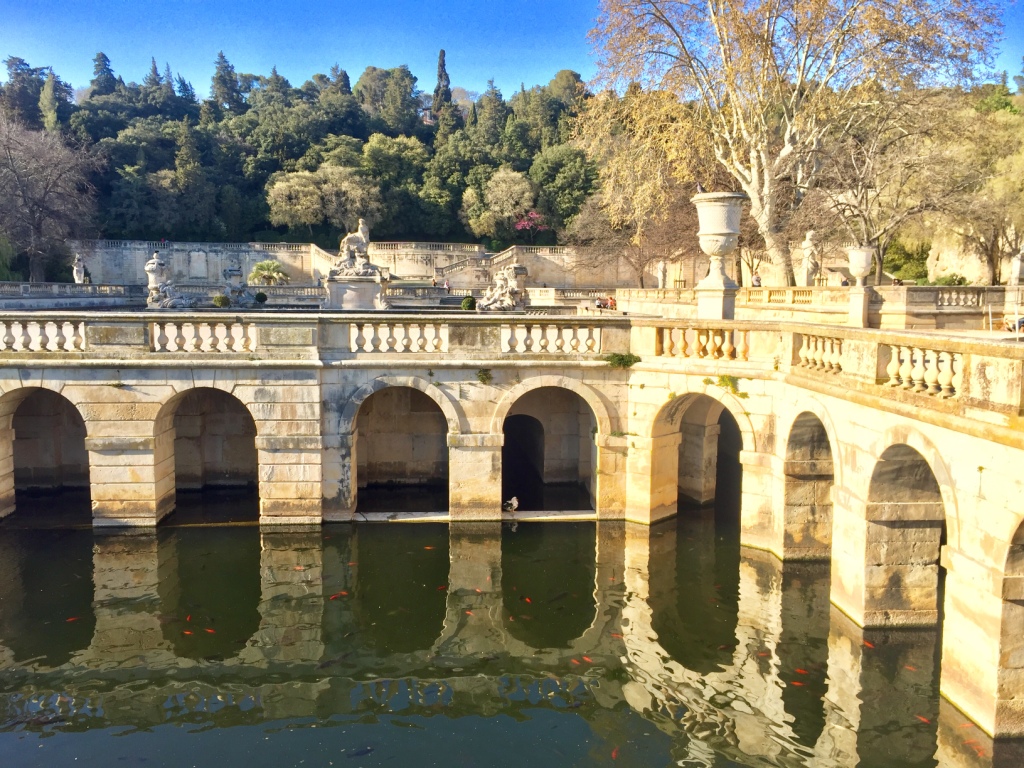
It’s the first day of spring, although the Jardins de la Fontaine smell more like early summer. Half the population of Nîmes is sitting on the lawns of the 17th century park, like the Uber Eats cyclist taking a break, and the other half are in the outdoor cafes of the old town. I walk up the balustraded stairways and look down at the fat orange fish in the ornamental ponds until my eyes are drawn to vivid purple amongst the green.

A path leads up through the pine woods to the highest point in Nîmes and the oldest of the Roman sites, the Tour Magne. From the top of the tower the line of the Via Domitia, built by the Romans to link the Alps with the Pyrenees, still carves through the city.

From up here you gain a true perspective of the Arènes de Nîmes – a gigantic bowl of a Roman amphitheatre with 34 rows of seats that rise up and outwards.

As I leave the Tour Magne, four police officers amble up to it. France is on alert with the Gilets Jaunes demos, but these four act more like curious tourists than law enforcers. I see them again and again that afternoon, wandering round and smiling, looking at things rather than people.

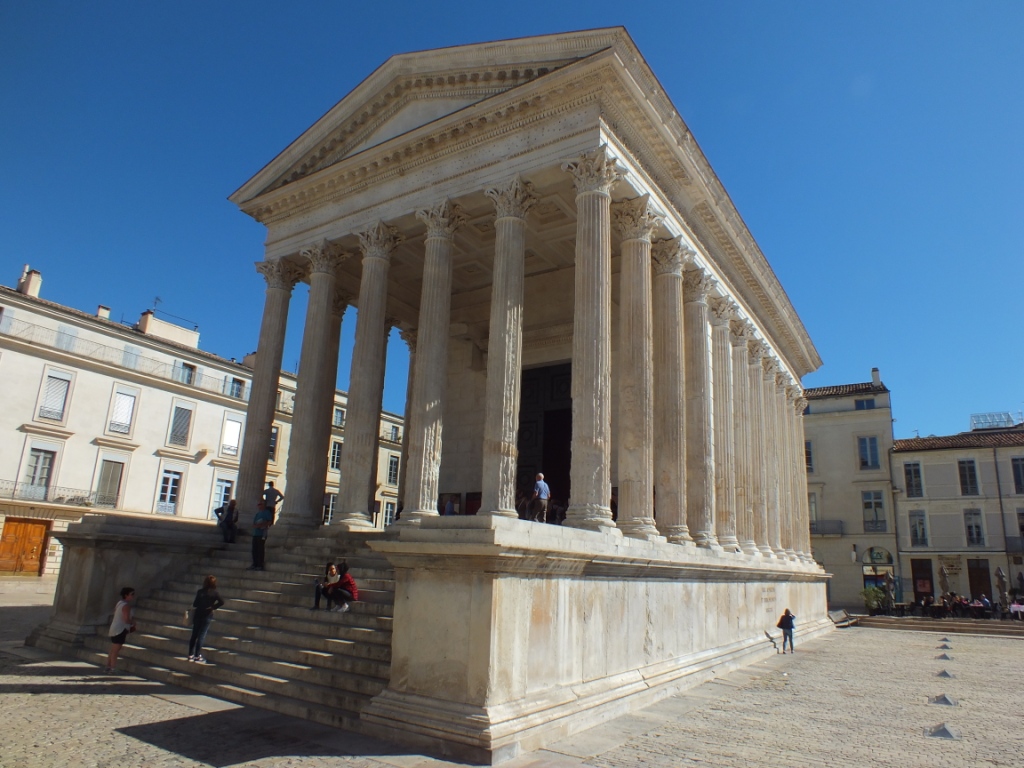
Crossing the road back into the pedestrianised old town, it’s a surprise to come face to face with one of the best preserved temples from the Roman world, right here in the middle of Nîmes.  The Maison Carrée has been a centrepoint of the city for almost 2,000 years.

It’s 6pm and still hot so I go into the Amorino ice cream shop where they carve my scoops into flower petals and politely check that I understand that lime basilic comes with basil as well as lime. As I step out of the shop I almost collide with a very elderly man in violently patterned shorts. He barks at me in a strangulated voice, in a language that could be English.

Darkness falls and it’s time to join everyone else eating outdoors. I choose a table opposite a narrow alley with a view through to the massive grey stones of the amphitheatre.  16 euros to sit here under the still-swollen moon, with a duck burger du Perigord and a small pichet of white wine; a bargain.

Taking the Eurostar from London to Avignon? Nîmes is just an hour or so by frequent train service from Avignon central. See Loco2 for times and tickets.

All of the Roman sites can be visited. Read more about visiting Nîmes here.

Le pont d'Avignon

Missing out the ‘must-sees’: a little flânerie in Avignon

Absorbing the city

Have you ever spent time visiting the must-sees of a city and then slowly realised that it’s the hidden corners and your observations of the people that stay with you over time, rather than what Tripadvisor tells you are The Ten Best Things to do in…?

Chatting to a casual acquaintance in Avignon, I happened to mention that I often use the city as a stopover as part of my slow travel to and from France, utilising the Eurostar direct service to London, but I’d never made a ‘proper’ visit to the town’s two crown jewels: the famous pont d’Avignon, and the Palais des Papes.  His jaw dropped in horror and he hastily moved on, perhaps worried that such lack of culture was contagious.

Yet it’s true.  Each time I contemplate the generous half-day to fill before the mid-afternoon departure back to King’s Cross, I simply continue the previous evening’s wandering around the city.   I’ve resisted joining the flow of headset-clad tourists as they slouch around the historic half bridge.  The Pont St-Bénézet dates from 1177 and is a symbol of the city, but the lofty gardens of the Rocher des Doms offer a wonderful aerial view of the bridge as it ends abruptly mid-stream in the Rhône, and a horizon stretching away to the Luberon.  Following the steps down the steep rockface of the Rocher brings you to a free ferry across the Rhone for a different perspective of the bridge.  Yet, to be frank, I was more taken with the long stretch of wildflowers growing parallel to the city walls, and the way that a set of shutters  held out mirrors to the sky.

Avignon shutters
Shutters in Avignon

I’ve also resisted entering the Palais des Papes, which, with its buttresses and crenellations, is as much a fortress as a papal palace. Walking around its immense walls, I’m struck by how the facade changes as the day’s light moves on.

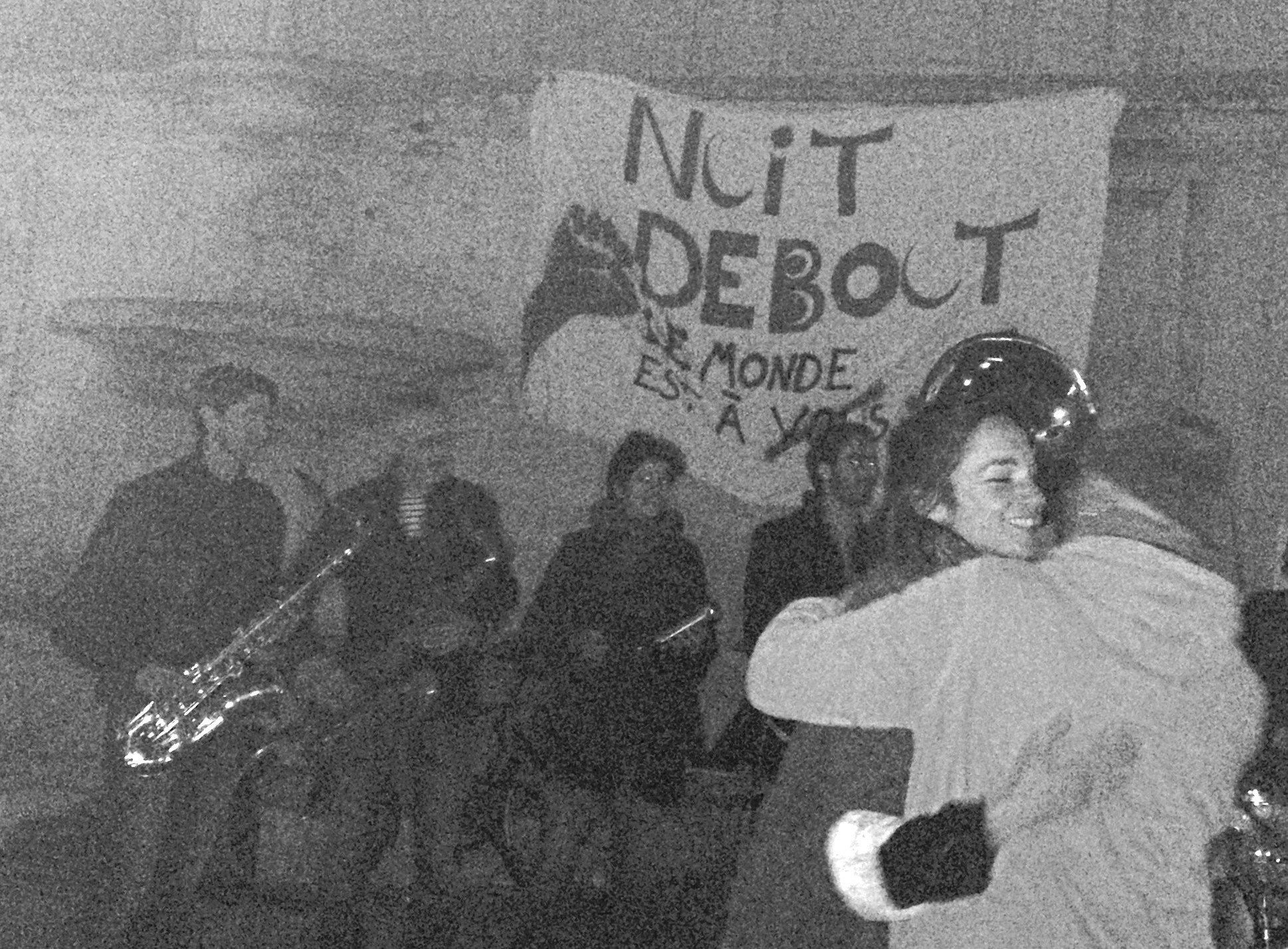
One balmy April evening in 2016, I watched as it became illuminated against the deep blue of the night sky, while in the shadows a small crowd gathered as part of the France-wide Nuit debout  protests against labour reforms and calls for a society built on more than profit.  The peaceful sit-in gradually evolved into an impromptu dance, with friends and strangers united towards a common cause.

Nuit debout Avignon
Nuit Debout gathering in Avignon

My stopovers have unintentionally coincided with the July festival d’Avignon, a world-famous arts festival with performances.  The streets of the old town become carnivalesque for a couple of weeks, swarming with visitors and studded with posters advertising performances; these often take place in improvised ‘theatres’ that pop up in all kinds of buildings.  Tiny restaurants open up and chairs spill over onto the cobbles.

Local reaction is understandably mixed about the way that the old town – home to around 12,000 inhabitants – is taken over in this way.  Wandering the backstreets, I came across a long line of placards affixed to buildings, detailing the history of the festival.  The display didn’t gloss over the current depth of feeling expressed by some of the inhabitants.  As I understood it, Avignon is no longer a town with a festival, but has become part of a festival that possesses a town.

avignon walls1
Wildflowers along the city walls

All this talk of urban wandering in France brings to mind the concept of the flâneur, a strolling observer of city life who wanders, loiters and explores, observing people and places.  The focus is on what’s happening in the crowd. The writer Walter Benjamin popularised the concept of the flâneur from the earlier work of the poet Baudelaire.  Awareness of the flâneur has grown alongside interest in psychogeography, which studies the art of becoming lost in the city as a way into its soul.  The act of flânerie, an aimless drift through urban landscapes, is at the heart of psychogeography.

Yet, as Lauren Elkin points out, the flâneur is a quintessentially male concept.  Although women haven’t always had the same freedom to walk the city streets by night and day, the art of urban wandering is not confined to men, with Virginia Woolf being one notable flâneuse.  Nevertheless, as Lauren argues, we perhaps shouldn’t see the flâneuse as a mere female equivalent of the flâneur, but as something distinct; often more defiant than the aimless and undoubtedly privileged flâneur of the literature.

I’m wary of drawing too deeply on the complex notion of the flâneur to describe the behaviour of the contemporary traveller, although it’s clear that it resonates with some travel bloggers.  Yet, like many concepts, it can help us to make sense of what we do.

It’s certainly a privilege to be able to traipse the city streets, to wander and observe anonymously.  But avoiding the tourist traps of The Ten Best Things in… can also save a small fortune, enough to indulge yourself among the used books in the delightful  Camili Books and Tea. I’d never have found that little gem if I’d limited my footfall to the main sites.

Palais des Papes, Avignon
Night falls on the Palais des Papes, Avignon