The Col de Pause is a starting point for some wonderful walks, as well as an up-close view of Mont Valier.
This describes a walk up to the pastures known by various spellings: Areau, Arreau, Arréou and Areou, and its emerald green lake.
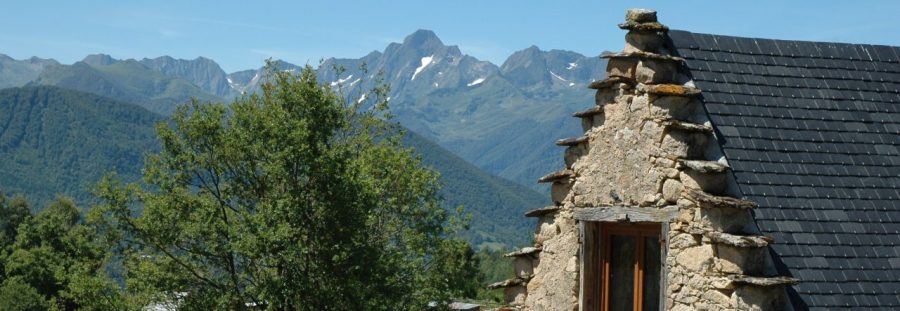
Some brave souls drive up to the parking area at the Col, but the road gets rougher and narrower beyond Laserre, so I park at Laserre and then walk along the GR10. That takes me around 40 mins to get to the Col de Pause. I never fail to be amazed by the view of Mont Valier up close:
At 2088m, Mont Ceint (also known as Pic de Girantès) gives a superb 360° panorama over the surrounding ridges and valleys. It’s also a fairly accessible and straightforward hike, although steep on the upper section.
The most straightforward route is from the parking at Coumebière. The first stage follows the GR10 zig zags (les lacets) that bring you up to the Port de Saleix in around an hour and a half.
Have you ever spent time visiting the must-sees of a city and then slowly realised that it’s the hidden corners and your observations of the people that stay with you over time, rather than what Tripadvisor tells you are The Ten Best Things to do in…?
Chatting to a casual acquaintance in Avignon, I happened to mention that I often use the city as a stopover as part of my slow travel to and from France, utilising the Eurostar direct service to London, but I’d never made a ‘proper’ visit to the town’s two crown jewels: the famous pont d’Avignon, and the Palais des Papes. His jaw dropped in horror and he hastily moved on, perhaps worried that such lack of culture was contagious.
Yet it’s true. Each time I contemplate the generous half-day to fill before the mid-afternoon departure back to King’s Cross, I simply continue the previous evening’s wandering around the city. I’ve resisted joining the flow of headset-clad tourists as they slouch around the historic half bridge. The Pont St-Bénézet dates from 1177 and is a symbol of the city, but the lofty gardens of the Rocher des Doms offer a wonderful aerial view of the bridge as it ends abruptly mid-stream in the Rhône, and a horizon stretching away to the Luberon. Following the steps down the steep rockface of the Rocher brings you to a free ferry across the Rhone for a different perspective of the bridge. Yet, to be frank, I was more taken with the long stretch of wildflowers growing parallel to the city walls, and the way that a set of shutters held out mirrors to the sky.
Shutters in Avignon
I’ve also resisted entering the Palais des Papes, which, with its buttresses and crenellations, is as much a fortress as a papal palace. Walking around its immense walls, I’m struck by how the facade changes as the day’s light moves on.
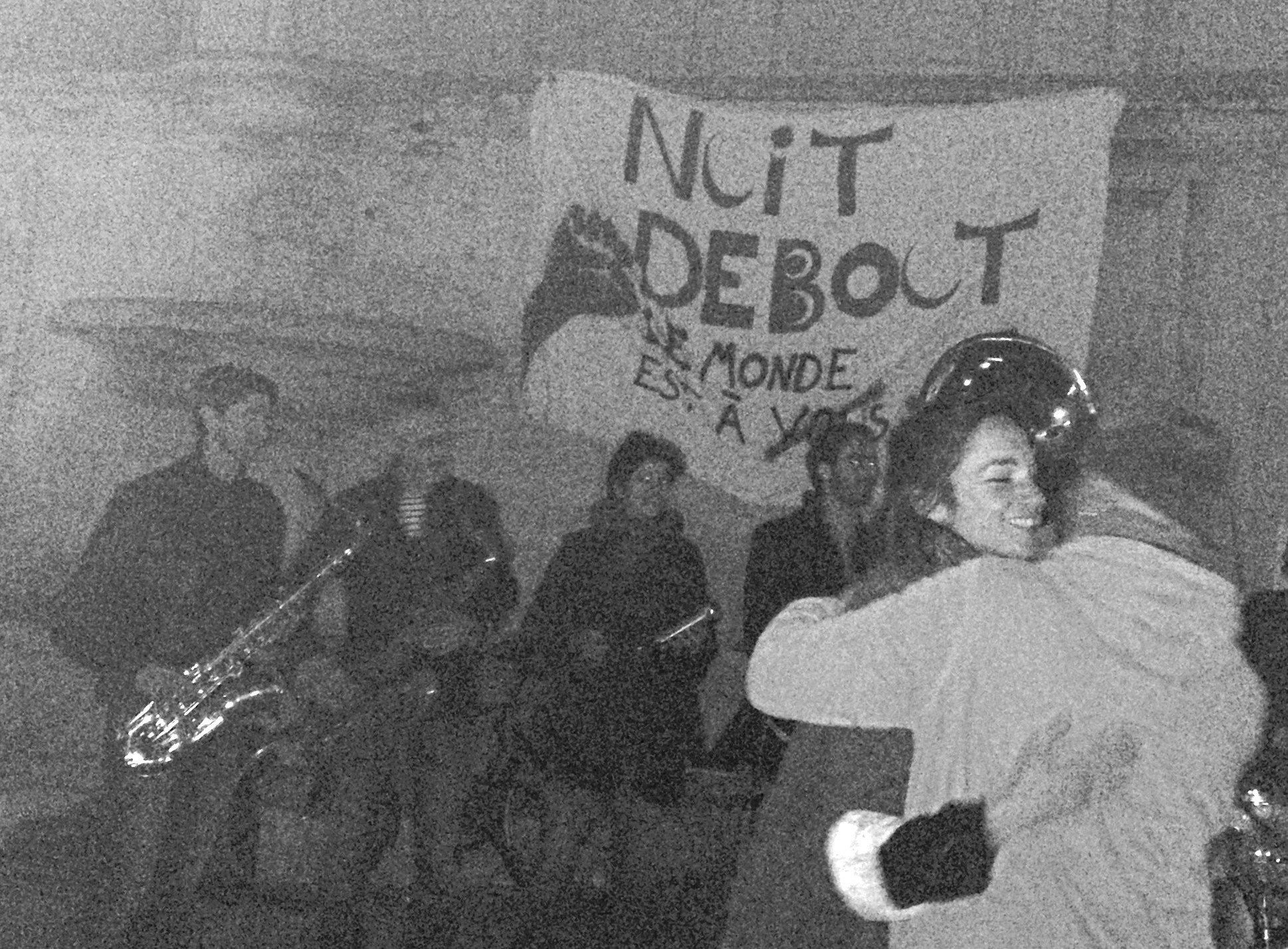
One balmy April evening in 2016, I watched as it became illuminated against the deep blue of the night sky, while in the shadows a small crowd gathered as part of the France-wide Nuit debout protests against labour reforms and calls for a society built on more than profit. The peaceful sit-in gradually evolved into an impromptu dance, with friends and strangers united towards a common cause.
Nuit Debout gathering in Avignon
My stopovers have unintentionally coincided with the July festival d’Avignon, a world-famous arts festival with performances. The streets of the old town become carnivalesque for a couple of weeks, swarming with visitors and studded with posters advertising performances; these often take place in improvised ‘theatres’ that pop up in all kinds of buildings. Tiny restaurants open up and chairs spill over onto the cobbles.
Local reaction is understandably mixed about the way that the old town – home to around 12,000 inhabitants – is taken over in this way. Wandering the backstreets, I came across a long line of placards affixed to buildings, detailing the history of the festival. The display didn’t gloss over the current depth of feeling expressed by some of the inhabitants. As I understood it, Avignon is no longer a town with a festival, but has become part of a festival that possesses a town.
Wildflowers along the city walls
All this talk of urban wandering in France brings to mind the concept of the flâneur, a strolling observer of city life who wanders, loiters and explores, observing people and places. The focus is on what’s happening in the crowd. The writer Walter Benjamin popularised the concept of the flâneur from the earlier work of the poet Baudelaire. Awareness of the flâneur has grown alongside interest in psychogeography, which studies the art of becoming lost in the city as a way into its soul. The act of flânerie, an aimless drift through urban landscapes, is at the heart of psychogeography.
Yet, as Lauren Elkin points out, the flâneur is a quintessentially male concept. Although women haven’t always had the same freedom to walk the city streets by night and day, the art of urban wandering is not confined to men, with Virginia Woolf being one notable flâneuse. Nevertheless, as Lauren argues, we perhaps shouldn’t see the flâneuse as a mere female equivalent of the flâneur, but as something distinct; often more defiant than the aimless and undoubtedly privileged flâneur of the literature.
I’m wary of drawing too deeply on the complex notion of the flâneur to describe the behaviour of the contemporary traveller, although it’s clear that it resonates with some travel bloggers. Yet, like many concepts, it can help us to make sense of what we do.
It’s certainly a privilege to be able to traipse the city streets, to wander and observe anonymously. But avoiding the tourist traps of The Ten Best Things in… can also save a small fortune, enough to indulge yourself among the used books in the delightful Camili Books and Tea. I’d never have found that little gem if I’d limited my footfall to the main sites.
Symbols of Englishness in the Ariège Pyrenees of France
I follow a few French Instagrammers as I love to see what others are doing in the Ariège mountains. Some of them post using English rather than French language. I guess it’s to reach a wider audience. Now that’s interesting because in Ariège, English isn’t widely spoken. People tell me Spanish is taught in schools before English.
Signage in the public sphere is what we call the linguistic landscape. You don’t see written English very often in the Ariège public sphere, but below are some interesting observations from when I researched English migration to France.
The Ariège is a depopulated area in the French Pyrenees. Why is it popular with Britons seeking a new life in France?
When I first began researching British incomers in Ariège, I was curious as to why they’d chosen that out-of-the-way corner of France. It turns out that choice wasn’t always the right word…
For quite a few people it was simply where the house was, rather than an informed decision based on what that area offered as a way of life to them.
Thinking of buying a property in France for a new life? Beware the British media!
A flood, an invasion, bloodsuckers… we’ve all seen immigrants depicted using this kind of language in the British press. Did you know British journalists living in France use the same language to refer to their compatriots who’ve also made the move?
Migration often fosters resentment, but resentment of the British abroad is often generated by other British people, in a kind of ‘us and them’ scenario.
Fascinated, I began a research project, investigating how the Brits in France were portrayed in the British media in the first decade of the 21st century.





 Michelle Lawson | Travels in the hidden corners of Europe